
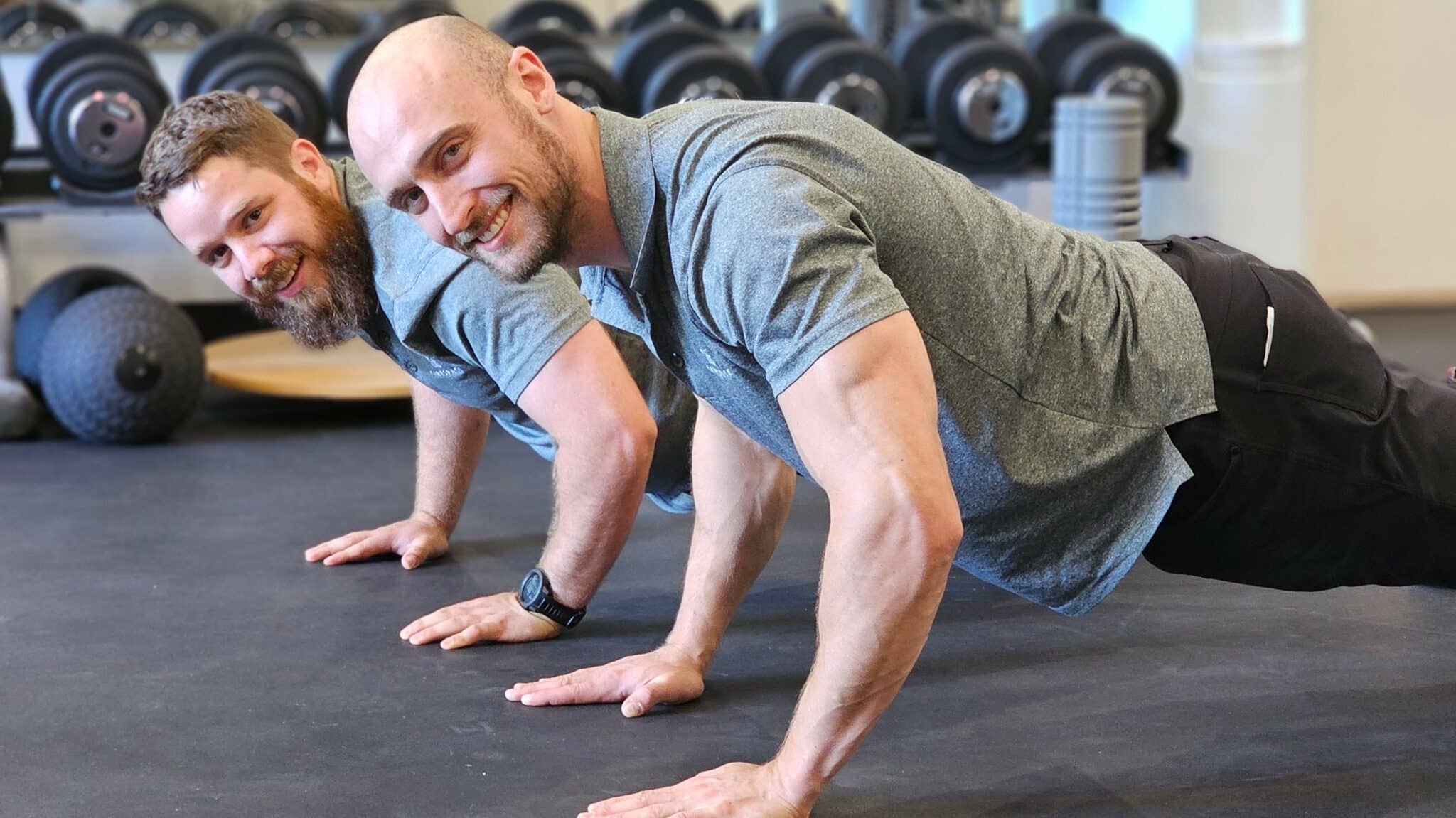
Personal Training in Kitchener, Waterloo & Cambridge
The gym doesn’t change your body. The right plan does.
A CARESPACE personal trainer assesses how you actually move, then builds a program around your body, your goals, and your life. Expert coaching, one trainer, one private gym, your full session.
Or call (519) 208-2273 – a real person answers.
People across Kitchener, Waterloo and Cambridge come to CARESPACE for their personal training.
Trusted Across Waterloo Region for Results That Last
Why Choose a CARESPACE Personal Trainer
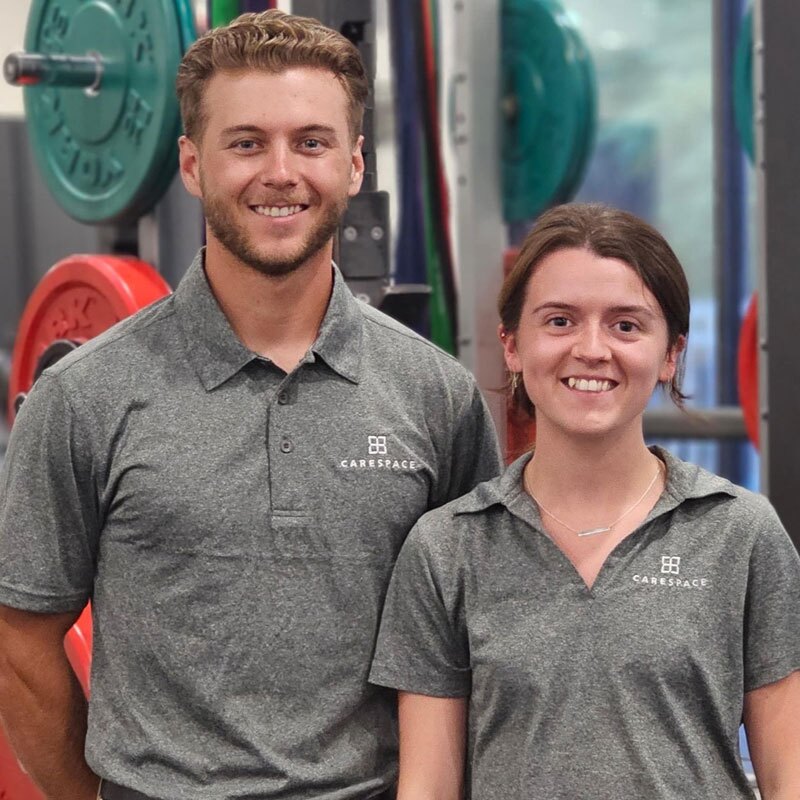
Choose Your CARESPACE Personal Trainer
Simply choose the best personal trainer near you to get started and book your first appointment.
Personal training is not regulated in Ontario, which means anyone can use the title regardless of their training. Knowing what to look for matters more here than almost anywhere else in fitness.
University-Educated Trainers, Not Weekend-Course Certifications
Every personal trainer at CARESPACE is a university-educated Kinesiologist or Athletic Therapist with formal training in anatomy, physiology, and biomechanics. That foundation goes well beyond a standard certification and is what lets them train clients with past injuries, chronic conditions, or no gym experience at all, safely.
A Full Session, One-on-One, in a Private Gym
Your trainer stays with you for the whole session. No rotating between clients, no shared floor, no handing you off to someone else. It is just you and your trainer in a private, fully equipped space, start to finish.
Open 8am–8pm Weekdays and 8am–6pm Weekends
CARESPACE clinics across Kitchener, Waterloo and Cambridge are open seven days a week, including evenings and weekends. You do not have to rearrange your work schedule to train.
Training Coordinated With Physiotherapy, Chiropractic and Nutrition
If your goals need more than a workout plan, your trainer can bring in a CARESPACE physiotherapist, chiropractor, dietitian or massage therapist who already has your assessment findings. One record, one team, one building. An independent trainer can refer you out; they cannot do this.
Find a Personal Trainer Near You

Live-answer Reception
Please call us at (519) 208-2273 to talk with our live-answer Reception Team who will be happy to book, reschedule appointments or answer any of your questions, or book online now.
Open 7-days a week!
Monday–Friday: 8 AM–8 PM
Saturday–Sunday: 8 AM–6 PM
Kitchener Personal Training Clinics
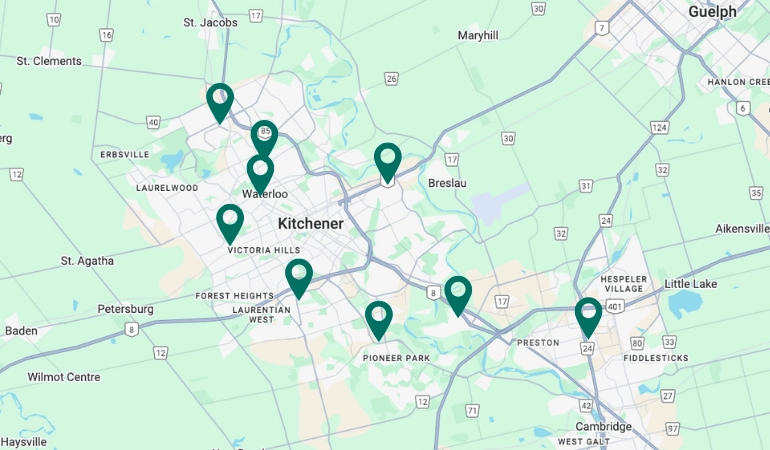
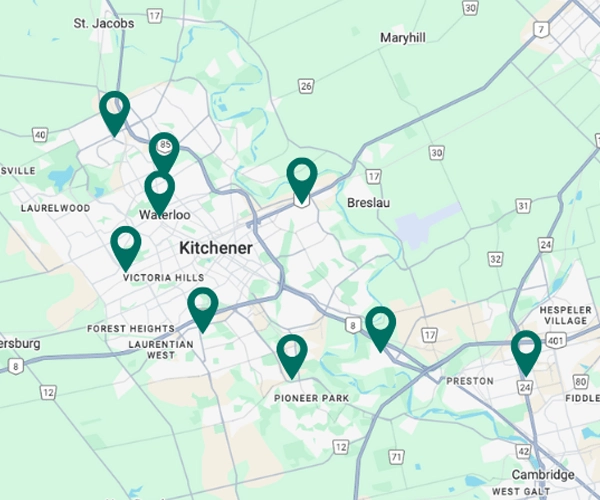
CARESPACE has five clinics in Kitchener offering personal training, with appointments seven days a week.
1373 Victoria Street North, #4A, Kitchener, ON N2B 3R6
720 Westmount Rd E, Unit 9, Kitchener, ON N2E 2M6
851 Fischer-Hallman Rd, Unit 201, Kitchener, ON N2M 5N8
4293 King Street East, Unit 6, Kitchener, ON N2P 2E9
1225 Homer Watson Boulevard, Unit 104, Kitchener, ON N2C 0E5
Waterloo Personal Training Clinics
CARESPACE has two clinics in Waterloo offering personal training, including Uptown and the Weber Street corridor providing convenience anywhere in the city.
564 Weber Street North #12, Waterloo, ON N2L 5C6
75 King St S, #28B, Waterloo, ON N2J 1P2
Cambridge Personal Training Clinics
CARESPACE offers personal training in Cambridge at our Hespeler Road clinic, open seven days a week. Our Deer Ridge location sits on the border of Kitchener and Cambridge providing convenient access to the communities of Preston and Blair.
529 Hespeler Road, Unit 1, Cambridge, ON N1R 6J2
4293 King Street East, Unit 6, Kitchener, ON N2P 2E9
Kitchener Personal Trainers
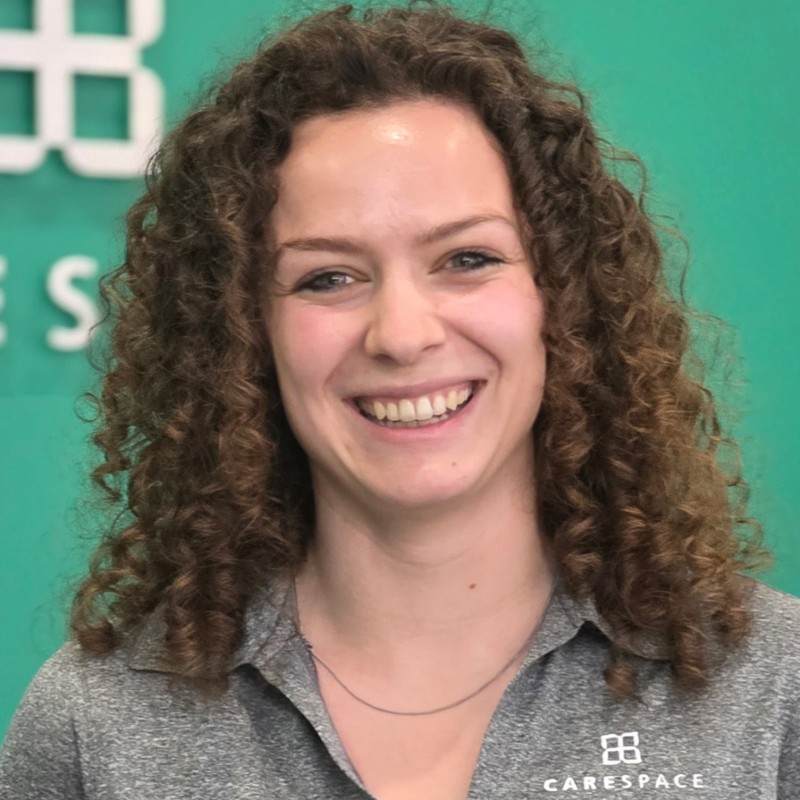

Kinesiologist
Fitness Trainer
Kitchener – Fischer-Hallman

Kinesiologist
Fitness Trainer
Kitchener - Victoria North

Kinesiologist
Fitness Trainer
Kitchener - Victoria North

Fitness Trainer
Kitchener - Westmount East
Waterloo Personal Trainers
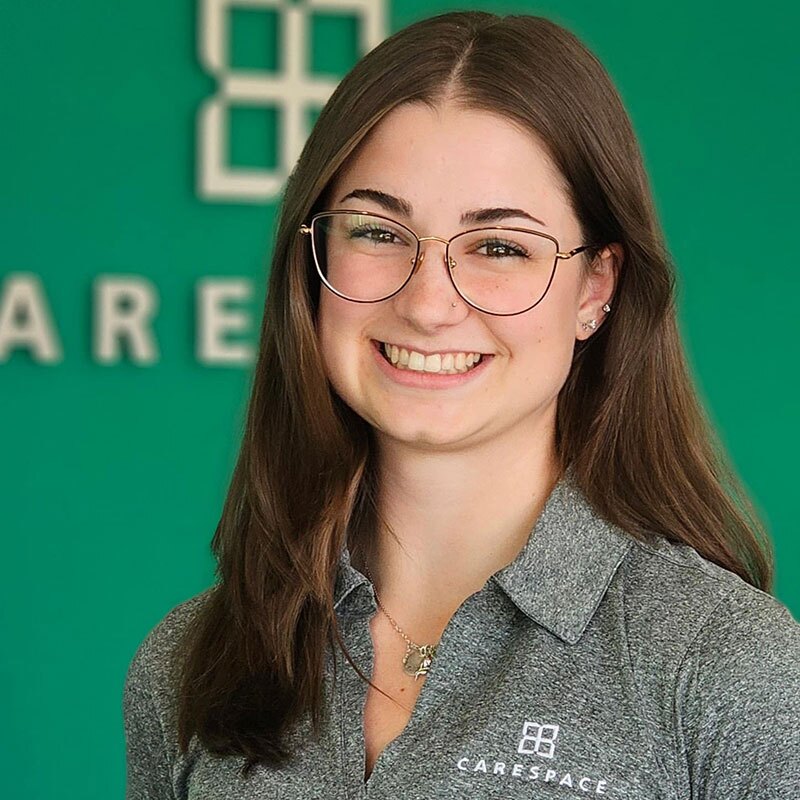
Kinesiologist
Fitness Trainer
Waterloo - Uptown Waterloo
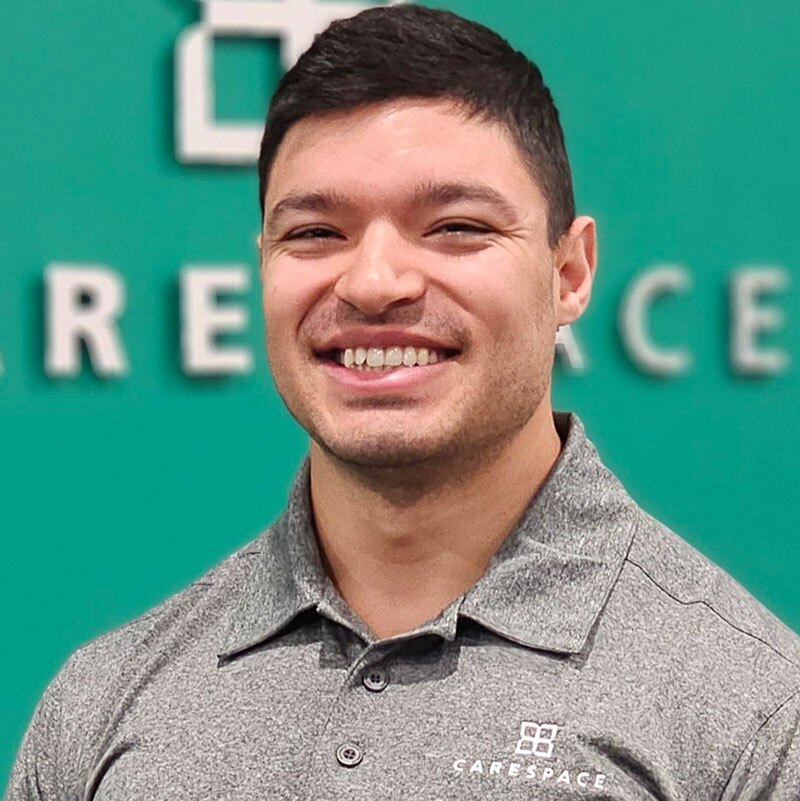
Kinesiologist/Fitness Trainer/Fascial Stretch Therapist
Clinic Director
Waterloo - Weber North
Prefer to talk to someone? Our live answer reception team is happy to help. Please call us at (519) 208-2273.
Cambridge Personal Trainers
Coming soon.
Prefer to talk to someone? Our live answer reception team is happy to help. Please call us at (519) 208-2273.
What Happens at Your First Nurse Practitioner Appointment
Your first visit follows the same five steps with every CARESPACE trainer.
1. A Full Health and Fitness History
Your trainer spends real time on your history: your goals, past injuries, current activity levels, the physical demands of your job, and any conditions that affect how you move. A previous injury or a long gap from exercise often shapes exactly where your program should start.
2. A Movement and Fitness Assessment
Your trainer evaluates how your body actually moves: posture, mobility, stability, strength, and cardiovascular fitness. This is a starting point, not a test, done in a comfortable, no-pressure way so both of you know where you’re beginning from.
3. A Clear Explanation of What They Found
Your trainer explains, in plain language, where you are right now and how that connects to the goals you came in with. You should leave understanding why the plan looks the way it does, not just what the exercises are.
4. Coaching on the Same Day
In most cases you’ll go through a sample workout during this first visit. Your trainer watches how you move, teaches foundational exercises with proper form, and adjusts in real time. It’s hands-on coaching from the start, not just a conversation.
5. A Plan You Can Follow
You leave with a clear training plan: how often to train, what your sessions will look like, and what to work on between them. Your trainer will tell you honestly if your goals would be better served by another approach or a different member of the CARESPACE team.
Why Would Someone See a Personal Trainer?
People work with a personal trainer when they want to start but aren’t sure how, when progress has stalled, or when past attempts on their own haven’t held. Personal training is most useful for building strength, losing weight and keeping it off, returning to exercise after an injury, training around a chronic condition like arthritis, improving athletic performance, and building the confidence to move well without fear of getting hurt.
Because a CARESPACE trainer assesses your whole body and builds around it, it’s also a reasonable option when generic programs haven’t worked, when a big gym feels intimidating, or when you want expert guidance that fits a schedule that never seems to cooperate.
Is It Better to See a Personal Trainer or a Kinesiologist?
Neither is better in general; they differ in scope and training. A Registered Kinesiologist (R.Kin) is a regulated health professional with a four-year university degree, qualified to work with injuries, chronic diseases and disabilities, often in a rehab setting. A personal trainer focuses on building fitness, strength and body composition for people who are generally healthy or have stable, well-managed conditions.
Choose a kinesiologist if you’re recovering from an injury or managing a complex condition. Choose a personal trainer if you’re cleared to exercise and want to get stronger, fitter, or leaner with expert coaching. At CARESPACE you often don’t have to choose, because most of our trainers are also Kinesiologists, and the wider team coordinates rather than duplicates.
Can a Personal Trainer Help With Weight Loss?
Yes, and the evidence for structured exercise here is strong. A trainer designs a program that combines resistance training and cardiovascular work to build lean muscle, protect your metabolism, and drive fat loss. Overviews of research show that exercise training produces significant weight loss, fat loss, and reductions in visceral fat in adults with overweight or obesity, and that resistance training helps preserve muscle while you lose fat.
The part most people underestimate is adherence, which is the single biggest predictor of lasting results. That’s the real value of a trainer: the structure, coaching and accountability that keep you consistent long after motivation fades.
What Is Personal Training?
Personal training is a service delivered by a fitness professional who assesses your health and fitness level, sets goals with you, designs a tailored exercise program, and provides the instruction, motivation and accountability to help you reach your outcomes. It is a client-focused practice aimed at improving strength, fitness, body composition and overall quality of life through exercise.
What a Personal Trainer Actually Does
A trainer assesses how you move and where you’re starting from. They build a program around your goals rather than a template. They coach proper form one-on-one to keep you safe and make every session count. And they adjust the plan as you get stronger and your goals change. Good training is applied to the individual, not run off a protocol.
Certifications a Personal Trainer May Hold
Because there’s no government regulation, reputable third-party certifications are how quality is signalled in Canada. The main bodies: CSEP (Canadian Society for Exercise Physiology), widely considered the gold standard in Canadian exercise science; Canfitpro (Canadian Fitness Professionals), the country’s largest certifying body; and CPTN (Certified Professional Trainers Network). Reputable certifications require passing theory and practical exams, plus ongoing continuing education and valid CPR/AED certification.
Personal Trainer or Kinesiologist? What the Titles Mean in Ontario
This distinction matters in Ontario. “Registered Kinesiologist” (R.Kin) is a protected, regulated title: a four-year university degree in the science of human movement, qualified to work with injuries, chronic diseases and disabilities, often in clinical or rehab settings.
“Personal trainer” is not a regulated title. Personal training is not a regulated health profession in Ontario, or anywhere in Canada, which means anyone can use the title regardless of qualifications, and training standards vary widely between individuals. That’s exactly why the credential behind the title matters. At CARESPACE, most of our trainers are also Registered Kinesiologists, so you get the regulated qualification and the certification together. Ask any trainer you’re considering what their education and certifications actually are.
What the Research Says About Personal Training
The evidence base for structured exercise is among the strongest in health. Here is what the research currently supports.
Strength and Body Composition
The strongest, most consistent evidence. Progressive resistance training reliably increases muscle strength, muscle size and bone mass. An umbrella review of 14 meta-analyses, covering 178 primary studies and 4,784 participants, confirmed resistance training as an effective way to build muscle across a range of program variables. This is the foundation a trainer builds on: real strength that carries into daily life.
Weight and Fat Loss
An overview of reviews is the highest tier of evidence, and it’s decisive here. An overview of 12 systematic reviews covering 149 studies found that exercise produced significant weight loss (mean reductions of roughly 1.5 to 3.5 kg), fat loss, and visceral fat loss, the harmful fat around the organs, in adults with overweight or obesity. Combining resistance and cardiovascular training, then staying consistent, is what drives lasting results.
Healthy Aging and Fall Prevention
Resistance training is one of the best-evidenced tools for aging well. A meta-analysis of 21 studies in adults aged 60 and over found that resistance training significantly improved muscle strength, physical functioning and several measures of quality of life. The impact on falls is just as clear: an updated review of 88 trials with more than 19,000 participants found that exercise reduced the rate of falls in community-dwelling older adults by about 21%, with the greatest effect from programs that challenge balance.
Safety
Training with a qualified professional is one of the most effective ways to lower the already-low risks of exercise. A trainer screens you before you start, coaches correct form to prevent strains, and progresses your program at a pace your body can handle. The most common issue is minor muscle soreness for a day or two.
Does OHIP or Insurance Cover Personal Training in Ontario?
No. OHIP does not cover personal training, and because it isn’t a regulated health profession, most extended health plans don’t either. Many benefit packages do include a Wellness Spending Account or Personal Spending Account, and services from a certified personal trainer are often an eligible expense under those accounts.
You do not need a physician referral. You pay at your appointment and we give you an itemized receipt with everything you need to submit for reimbursement.
Personal Training FAQ
Do I need a referral to see a personal trainer?
No. You can book an assessment directly with our team, no doctor’s referral required. Your trainer uses a standard health screening tool (the PAR-Q+) to confirm it’s safe for you to begin, and will suggest checking with your doctor first if anything comes up.
Do I need to be fit before I start?
Not at all. Trainers work with every level, from complete beginners to competitive athletes. Your trainer meets you where you are and builds a program that’s safe and appropriate for your current abilities. The point is to help you start, wherever your starting point is.
What should I wear to a personal training session?
Comfortable athletic clothing you can move freely in, and supportive athletic shoes. Bring a water bottle and a small towel. Your trainer supplies all the equipment in our private, fully equipped gym.
I find big gyms intimidating. What is your facility like?
Every session takes place in a private gym: just you and your trainer in a clean, professional, fully equipped space. No crowds, no waiting for machines, no self-consciousness. It lets you focus on your workout and ask questions freely while you build confidence.
I have no time with my kids' schedules. How does this work?
This is exactly what our Program Design Model is for. After an initial assessment and a few instructional sessions in our private gym, your trainer builds a custom program for you to do on your own time, at home or your own gym, with regular check-ins. You get expert guidance without needing multiple in-person sessions a week.
How long does it take to see results?
It depends on your goals, starting point, consistency, and factors like nutrition and sleep. Many people feel stronger and more energetic within a few weeks. Noticeable changes in strength or body composition usually take several weeks to a few months of consistent effort. Your trainer sets realistic expectations and tracks your progress along the way.
Can I see a personal trainer and a physiotherapist at the same time?
Yes, and it’s one of the real advantages of CARESPACE. Your trainer coordinates directly with our physiotherapists, chiropractors and dietitians, sharing one record under one roof. Your physiotherapist can clear you for exercise and pass any movement restrictions straight to your trainer, so your program is safe and everyone is working from the same plan.
Book a Personal Trainer in Kitchener, Waterloo or Cambridge
Choose your personal trainer and your clinic, and book online in under a minute. Open seven days a week, weekdays 8am–8pm and weekends 8am–6pm. No referral needed, and you will get an itemized receipt at your appointment for your Wellness Spending Account.
or call (519) 208-2273 and speak to our reception team.
Personal Training Articles
Explore more expert tips and insights on how personal training can improve your strength, mobility, and overall wellness. See all personal training articles.