

Physiotherapy in Cambridge
CARESPACE provides physiotherapy services in Cambridge to help restore movement, reduce pain, and support recovery from injury through personalized rehabilitation programs.
See our Cambridge locations to find a physiotherapist near you.
See our Cambridge Physiotherapy Team
Open 7–days a week!
Monday–Friday: 8 AM–8 PM
Saturday–Sunday: 8 AM–6 PM
Appointments available now – call (519) 208-2273 or book online today.
Cambridge Physiotherapists for Movement and Wellness

Choose Your Cambridge Physiotherapist
Simply choose the best physiotherapist near you to get started and book your first appointment.
For the hardworking individuals and families of Cambridge, staying healthy and active is essential for a good quality of life. When an injury, chronic condition, or everyday aches and pains slow you down, you need a practical, effective, and trustworthy solution.
If you’re looking for physiotherapy near you, CARESPACE offers client-focused, evidence-based care at our welcoming clinics across Cambridge. Our physiotherapists are highly trained healthcare professionals who specialize in assessing, treating, and preventing musculoskeletal and movement-related issues. Through targeted therapy, individualized exercise programs, and hands-on techniques, we help you reduce pain, regain mobility, and restore strength.
At CARESPACE, your treatment plan is tailored to your unique needs and goals, ensuring you can return to work, family life, and your favorite activities with confidence. Choosing CARESPACE for physiotherapy in Cambridge means working with dedicated professionals committed to helping you recover fully and maintain long-term physical health.
Why Choose CARESPACE for Physiotherapy in Cambridge
In Cambridge, you deserve healthcare that is straightforward, effective, and trustworthy. CARESPACE offers evidence-based physiotherapy designed to help you feel better, restore function, and live an active, pain-free life. Our focus is on practical, results-driven care that addresses your unique needs and goals.
CARESPACE physiotherapists are highly trained professionals who specialize in assessing, treating, and preventing musculoskeletal and movement-related issues. Using targeted exercises, hands-on therapy, and individualized rehabilitation plans, we help reduce pain, improve mobility, and rebuild strength. Whether you are recovering from a chronic injury, post-surgical procedure, or managing conditions like arthritis or back pain, your treatment plan is tailored to your situation.
At CARESPACE, your care begins with listening to your story and understanding your goals—whether that means working a full day without pain, recovering from surgery, or returning to your favorite activities. Choosing CARESPACE for physiotherapy in Cambridge means working with dedicated professionals committed to helping you recover fully and maintain long-term physical health.
Learn more about physiotherapy at CARESPACE.
Thousands of people have chosen CARESPACE for physiotherapy that delivers real results.
Where to Find Physiotherapy Near You in Cambridge

Live-answer Reception
Please call us at (519) 208-2273 to talk with our live-answer Reception Team who will be happy to book, reschedule appointments or answer any of your questions, or book online now.
Open 7-days a week!
Monday–Friday: 8 AM–8 PM
Saturday–Sunday: 8 AM–6 PM
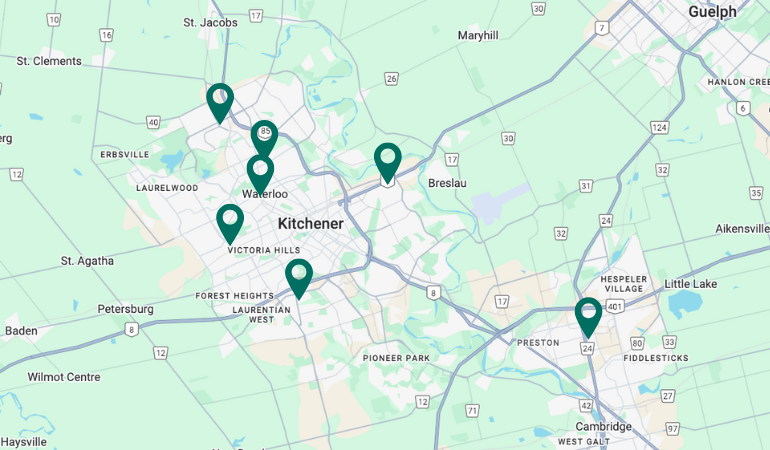
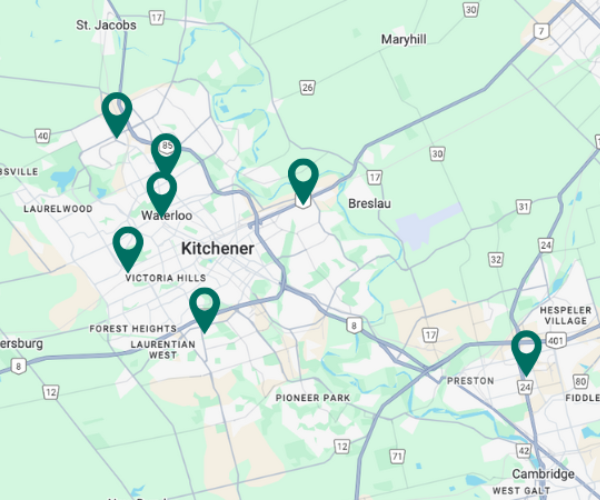
Cambridge Physiotherapy Clinics
View All Physiotherapy Clinics Near Cambridge
To see all of our locations and find the one that is most convenient for you, you can visit our All CARESPACE Locations page.
Meet Your Physiotherapy Team in Cambridge






See all CARESPACE Physiotherapists
Not sure who to book with? Explore our full physiotherapy team and find the right fit for you.
Prefer to talk to someone? Our live answer reception team is happy to help. Please call us at (519) 208-2273.
What to Expect from Physiotherapy at CARESPACE
When you visit a CARESPACE physiotherapist in Cambridge, you can expect a clear, respectful, and thorough experience from start to finish. Our process is designed to make you feel comfortable and informed, focusing on practical steps to identify the cause of your pain and implement an effective plan for your recovery and long-term wellness. We believe in building a strong, trusting relationship with our clients and working as a team to achieve your health goals.
Personalized Plans for Your Goals
We know that every person’s situation is unique. That’s why your care at CARESPACE starts with us listening carefully to you. You’ll have a detailed discussion with your physiotherapist about your health history, your daily activities, and what you hope to achieve through treatment. This is followed by a hands-on physical assessment, where we use proven diagnostic tests to find the exact source of your problem, whether it’s related to a disc issue, joint arthritis, a repetitive strain injury from work, or post-surgical stiffness. Once we have a clear picture, your physiotherapist will explain the diagnosis in plain language and work with you to create a personalized treatment plan that fits your life and your goals, ensuring you are always an active partner in your care.
Evidence-Based Treatments That Work
Our commitment at CARESPACE is to provide treatments that are proven to be effective and will get you back on your feet as efficiently as possible. Our Cambridge physiotherapists utilize a variety of hands-on techniques to help you move better and feel lasting relief. A primary method is therapeutic exercise, which is essential for rebuilding strength, improving mobility, and preventing future injuries. We also use manual therapy techniques to gently mobilize stiff joints and release tight muscles, providing immediate relief and improving function. Education is another key component; we provide practical advice on how to manage your condition, modify activities, and improve your ergonomics at work or home to prevent recurrence. We track your progress based on functional improvements that matter to you, like being able to complete a work shift without pain or enjoying a walk along the river, ensuring your recovery is meaningful.
Multidisciplinary Support When You Need It
Some health issues are complex and benefit from more than one type of expertise. The CARESPACE model is built on our three pillars of care: Manual Therapy, Mental Health, and Lifestyle Optimization. This means your physiotherapist is part of a larger, collaborative team that can be called upon when needed. For instance, if your recovery from a chronic condition is being impacted by the stress and frustration that often comes with long-term pain, we can facilitate a seamless connection with a mental health professional within our clinic. If your physiotherapist identifies that another form of manual therapy could accelerate your progress with a stubborn joint, they can consult directly with a chiropractor or massage therapist on your team. This teamwork ensures you get complete, well-rounded care for faster, more durable results.
What is Physiotherapy?
Physiotherapy, also known as physical therapy, is a science-based healthcare profession that views movement as central to health and well-being. It is a primary care, autonomous profession that is grounded in rigorous university-level education, strict professional regulation, and a deep commitment to evidence-informed practice. Physiotherapists are experts in the assessment, diagnosis, and treatment of a wide range of conditions affecting the musculoskeletal, neurological, and cardiorespiratory systems.
A Regulated Health Profession in Ontario
In Ontario, physiotherapy is a regulated health profession governed by the College of Physiotherapists of Ontario. This governing body operates under the Regulated Health Professions Act, 1991, and its primary mandate is to protect the public interest. It achieves this by ensuring that physiotherapists practice safely, competently, and ethically. The titles “Physiotherapist” and “Physical Therapist” are legally protected, meaning only individuals who are registered with the College are permitted to use them, providing the public with a clear and reliable way to identify qualified practitioners.
The journey to becoming a registered physiotherapist in Ontario is extensive and rigorous, ensuring a high standard of care:
- University Education: An individual must first complete a four-year undergraduate degree with specific prerequisite courses in sciences like anatomy and physiology.
- Master’s Degree: Following their undergraduate studies, they must be accepted into and complete a Master’s degree in physiotherapy from an accredited Canadian university program. This intensive program involves advanced academic coursework and extensive hands-on clinical placements.
- National Competency Exam: Graduates must then successfully pass the national written Physiotherapy Competency Exam (PCE), which is administered by the Canadian Alliance of Physiotherapy Regulators (CAPR). This exam tests the essential knowledge required to practice safely and effectively.
- Clinical Exam: After passing the written exam, candidates in Ontario must pass the Ontario Clinical Exam (OCE), a practical examination that assesses their clinical skills, safety, and judgment in real-world scenarios.
- Registration and Continuing Competence: Only after successfully completing all these steps can an individual apply for registration with the College of Physiotherapists of Ontario. Once registered, they are required to participate in ongoing professional development to maintain their competence and stay current with the latest research and best practices.
The Scope of Physiotherapy Practice
The Physiotherapy Act, 1991, provides a broad and comprehensive definition for the scope of practice: “the assessment of neuromuscular, musculoskeletal and cardiorespiratory systems, the diagnosis of diseases or disorders associated with physical dysfunction, injury, or pain, and the treatment, rehabilitation and prevention or relief of physical dysfunction, injury, or pain.”
This scope allows physiotherapists to act as primary contact professionals, meaning you do not need a doctor’s referral to see one. They are also authorized to perform a number of “controlled acts,” which are procedures that carry a higher risk of harm if not performed by a qualified professional. In Ontario, these acts for physiotherapists include:
- Communicating a Diagnosis: Identifying a disease or disorder as the cause of a person’s symptoms.
- Spinal Manipulation: Moving the joints of the spine beyond their usual range of motion using a fast, low-amplitude thrust.
- Acupuncture and Dry Needling: Performing a procedure on tissue below the dermis, provided they have completed the required post-graduate training and are on the College’s roster.
- Treating Wounds: Cleansing, debriding, and dressing wounds below the dermis.
- Pelvic Health Interventions: Performing internal assessments and treatments for pelvic floor dysfunction as part of our comprehensive pelvic health physiotherapy services.
Common Physiotherapy Techniques and Modalities
A physiotherapist’s toolkit is diverse, evidence-based, and always tailored to the individual needs of the patient. Treatment is typically active and focused on education and empowerment, giving you the tools to participate in your own recovery. Common techniques include:
- Therapeutic Exercise: This is the cornerstone of modern physiotherapy. Far from generic workout plans, these are highly specific, prescribed exercises designed to achieve a particular goal, such as improving strength in a weakened muscle, restoring range of motion to a stiff joint, improving flexibility in tight tissues, or correcting dysfunctional movement patterns. Your home exercise program is a critical component of your success.
- Manual Therapy: These are the skilled, hands-on techniques used to diagnose and treat restrictions in joints and soft tissues. This can include joint mobilizations (gentle, graded movements to restore joint glide), manipulations (a high-velocity, low-amplitude thrust to restore movement, also known as an adjustment), and various forms of therapeutic massage and soft tissue release to decrease muscle tension and improve tissue mobility.
- Patient Education: A crucial and empowering part of physiotherapy is helping you understand your condition. Your physiotherapist will provide you with clear information about your diagnosis, the factors contributing to it, and the rationale behind your treatment plan. This includes practical advice on posture, workplace ergonomics, activity modification, and self-management strategies to help you control your symptoms and prevent recurrence.
- Modalities: In some cases, physiotherapists may use therapeutic modalities to supplement other treatments, primarily to assist with pain relief and tissue healing. These are never used as a standalone treatment but can be helpful in the early stages of recovery. They can include heat or cold therapy, electrotherapy (like TENS for pain relief or NMES for muscle activation), and therapeutic ultrasound.
- Acupuncture and Dry Needling: Many physiotherapists pursue extensive post-graduate training to perform acupuncture or dry needling. These techniques involve the insertion of fine needles to help manage pain, reduce muscle tension, and promote healing, and can only be performed by physiotherapists who are rostered with the College.
Advanced Expertise: The FCAMPT Designation
For physiotherapists seeking the highest level of specialization in orthopaedics, there is an intensive path of post-graduate education that leads to becoming a Fellow of the Canadian Academy of Manipulative Physiotherapy (FCAMPT). This is an internationally recognized certification that signifies the highest level of clinical and academic excellence in orthopaedic manual and manipulative physiotherapy.
An FCAMPT-certified physiotherapist has completed years of additional study and mentorship, mastering advanced skills in:
- Complex Clinical Reasoning: The ability to diagnose and manage complex musculoskeletal conditions that may not have responded to previous treatments.
- Advanced Manual Therapy: A high level of proficiency in hands-on techniques, including gentle joint mobilizations and specific joint manipulations of the spine and peripheral joints.
- Evidence-Informed Practice: A deep commitment to integrating the latest scientific research into their clinical decision-making.
This advanced training allows them to manage complex cases with a greater degree of precision and expertise, making them a valuable resource for patients with persistent or challenging musculoskeletal problems.
Physiotherapy vs. Other Approaches
Navigating different therapeutic options for pain and injury can be confusing. Understanding how physiotherapy compares to other common treatments can help you make an informed decision about your health. At CARESPACE, we believe the best results often come from an integrated approach where these disciplines work together.
Physiotherapy vs. Chiropractic Care
While both physiotherapists and chiropractors are highly trained, regulated professionals who treat musculoskeletal pain, their core philosophies and primary treatment tools differ. Physiotherapy’s primary focus is on restoring overall movement and function through a broad toolkit that emphasizes therapeutic exercise, activity modification, patient education, and manual therapy for the entire body. A chiropractor’s primary focus is on the diagnosis and treatment of the spine and its relationship to the nervous system, using the spinal adjustment (a specific form of manipulation) as their main therapeutic tool to restore joint mechanics and reduce nerve irritation. At CARESPACE, a patient with low back pain might see a chiropractor to restore motion to a restricted spinal joint and a physiotherapist to strengthen the core muscles that support it, providing a more complete and durable solution.
Physiotherapy vs. Massage Therapy
The key difference here is one of diagnosis versus tissue-specific treatment. Physiotherapy is a diagnostic profession; a physiotherapist assesses your condition, provides a diagnosis, and creates a comprehensive rehabilitation plan to restore long-term function. Registered Massage Therapy focuses specifically on the assessment and manipulation of the body’s soft tissues (muscles, tendons, ligaments, and fascia) to relieve muscle tension, improve circulation, and promote relaxation. A physiotherapist might diagnose a rotator cuff injury and prescribe strengthening exercises, while a massage therapist on the same team would work on releasing the chronic tightness in the surrounding neck and shoulder muscles that are contributing to the dysfunctional movement pattern.
The CARESPACE Difference: Why an Integrated Approach is Best
You do not have to choose. The core philosophy at CARESPACE is that the best outcomes are achieved when these different therapeutic approaches work in synergy. A complex problem like chronic back pain is rarely just a joint issue, or just a muscle issue, or just a movement pattern issue—it’s often all three. In a traditional model, you would have to see three separate practitioners at three different clinics who never speak to one another, leaving you to coordinate your own care. At CARESPACE, your team of health professionals collaborates in real-time to determine the optimal combination of treatments for your specific needs. Your integrated, client-focused plan ensures you receive the most comprehensive, efficient, and effective care possible.
Insurance & Payment for Physiotherapy Services
At CARESPACE, we strive to make the financial aspect of your care as simple and transparent as possible. Physiotherapy provided by a Registered Physiotherapist is a covered benefit under most extended health plans in Ontario. We provide a detailed, official receipt after every appointment that contains all the necessary information (including your therapist’s registration number) for you to easily submit a claim to your insurance provider for reimbursement. As primary care providers, no physician referral is required to begin care, allowing you to access treatment without delay.
Frequently Asked Questions About Physiotherapy in Cambridge
Do I need a referral to see a physiotherapist in Cambridge?
No, a doctor’s referral is not necessary to see a physiotherapist in Cambridge. As primary healthcare providers in Ontario, you can schedule an appointment with us directly. This allows for faster access to care. We do advise checking your extended health insurance plan, as some policies may require a referral for reimbursement.
Which CARESPACE clinics in Cambridge offer physiotherapy?
You can find our expert physiotherapy services at all CARESPACE clinics located conveniently throughout Cambridge. We have established these locations to be accessible and welcoming, making it easier for you to incorporate your health appointments into your daily routine.
Do you handle WSIB (workplace injury) claims for physiotherapy?
Yes, CARESPACE is equipped to manage the treatment and reporting for Workplace Safety and Insurance Board (WSIB) claims. Our team can help you navigate the process while providing the expert rehabilitative care you need to recover from a work-related injury and return to your job safely.
What is the difference between physiotherapy and massage therapy?
The key difference is that physiotherapy is a diagnostic profession focused on rehabilitation. A physiotherapist assesses and diagnoses your condition and creates a long-term plan involving exercise and manual therapy to restore function. A Registered Massage Therapist focuses specifically on treating the body’s soft tissues to relieve pain and tension. At CARESPACE, they work as a team.
Is physiotherapy effective for arthritis?
Yes, physiotherapy is a highly recommended and effective treatment for managing the symptoms of arthritis. A physiotherapist can teach you specific exercises to improve joint mobility and strength, as well as provide strategies to manage pain and continue with your daily activities.
Is physiotherapy painful?
Yes, physiotherapy is a highly recommended and effective treatment for managing the symptoms of arthritis. A physiotherapist can teach you specific exercises to improve joint mobility and strength, as well as provide strategies to manage pain and continue with your daily activities.
What is an FCAMPT physiotherapist?
FCAMPT stands for Fellow of the Canadian Academy of Manipulative Physiotherapy. It is an internationally recognized certification for physiotherapists who have completed extensive post-graduate training in advanced manual and manipulative therapy. This designation signifies the highest level of skill and knowledge in orthopaedic physiotherapy and is a mark of advanced expertise in treating complex joint and muscle conditions.
Book Your Physiotherapy Appointment in Cambridge Today
It’s time to address the pain or injury that’s holding you back from living your life fully. Book your physiotherapy appointment at your nearest CARESPACE location in Cambridge and get on the path to recovery. With no referral required, simple online booking, and a team dedicated to your well-being, getting the professional care you need is easy. Experience practical, evidence-based care from a team that is committed to helping you move better, feel your best, and stay active and strong in the Cambridge community. Let our team help you get back to doing what you do best, without pain holding you back.
Book now and experience evidence-based care designed for you.