

Counselling in Cambridge
CARESPACE provides counselling and psychotherapy services in Cambridge to help improve mental health, manage stress, and support emotional wellbeing through evidence-based counselling.
See our Cambridge locations to find a counsellor near you.
See our Cambridge Counselling Team
Open 7–days a week!
Monday–Friday: 8 AM–8 PM
Saturday–Sunday: 8 AM–6 PM
Appointments available now – call (519) 208-2273 or book online today.
Cambridge Counselling for Mental Wellness

Choose Your Cambridge Therapist
Simply choose the best therapist near you to get started and book your first appointment.
For the resilient and hard-working individuals and families of Cambridge, taking care of your mental and emotional health is a cornerstone of a strong, stable, and happy life. The demands of work, family responsibilities, and navigating life’s inevitable challenges can be significant, and having a trusted, confidential space to find your footing is essential. If you are looking for professional counselling near you, CARESPACE offers a warm, compassionate, and evidence-based approach at our clinics across Cambridge. We provide a safe and supportive environment to help you work through difficulties, strengthen your most important relationships, and build a more resilient sense of self. Our team of registered psychotherapists and social workers utilizes a coordinated care model, recognizing that true well-being involves both mind and body. At CARESPACE, we are dedicated to supporting the Cambridge community with practical, effective care you can rely on.
Why Choose CARESPACE for Counselling in Cambridge
Making the decision to seek counselling is an act of strength, and finding a therapist you can trust is essential. In Cambridge, CARESPACE offers professional, evidence-based mental health support designed to help you navigate life’s challenges with confidence. Our approach is practical, compassionate, and centered on your personal goals, empowering you to make meaningful, lasting changes. We don’t offer temporary fixes—we help you build a stronger foundation for your emotional well-being and future resilience.
At CARESPACE, your therapy is grounded in proven, effective methods. Our registered psychotherapists and social workers are trained in well-researched modalities such as Emotionally Focused Therapy (EFT) for couples and Cognitive Behavioural Therapy (CBT) for anxiety and depression. Every plan is tailored to your unique situation: we take the time to listen, understand your concerns, and create a clear, practical path to help you achieve your goals.
Choosing CARESPACE for counselling in Cambridge means working with a dedicated, compassionate team focused entirely on helping you feel supported, understood, and empowered. Here, you receive dependable, results-driven therapy that equips you to face life’s challenges with confidence and resilience.
Learn more about counselling and psychotherapy at CARESPACE.
Thousands of people have chosen CARESPACE for counselling that delivers real results.
Where to Find Counselling Near You in Cambridge

Live-answer Reception
Please call us at (519) 208-2273 to talk with our live-answer Reception Team who will be happy to book, reschedule appointments or answer any of your questions, or book online now.
Open 7-days a week!
Monday–Friday: 8 AM–8 PM
Saturday–Sunday: 8 AM–6 PM
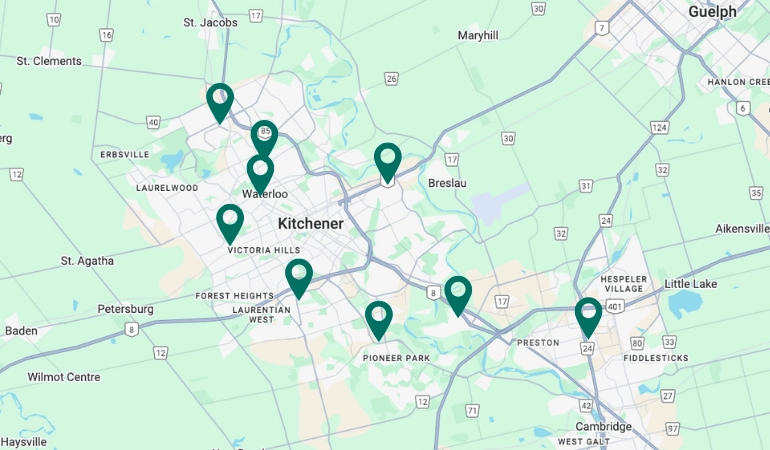
Cambridge Counselling Clinics
See All Counselling Clinics Near Cambridge
For a complete list of all our clinics and to find the one that works best for you, please visit our All CARESPACE Locations page.
Meet Your Counselling Team in Cambridge

Psychotherapist
Cambridge - Hespeler Road

Psychotherapist
Cambridge - Hespeler Road

Psychotherapist
Cambridge - Hespeler Road

Psychotherapist
Clinic Director
Cambridge - Hespeler Road
See all CARESPACE Therapists
Not sure who to book with? Explore our full therapy team and find the right fit for you.
Prefer to talk to someone? Our live answer reception team is happy to help. Please call us at (519) 208-2273.
What to Expect from Counselling at CARESPACE
Taking the step to begin counselling is a sign of resilience and hope. At CARESPACE in Cambridge, your experience is designed to be supportive, respectful, and genuinely helpful. Our first priority is to build a strong, trusting relationship with you in a safe and non-judgmental atmosphere. This therapeutic alliance is the most important part of our work, allowing us to collaboratively navigate your challenges and celebrate your strengths.
Personalized Plans for Your Goals
Your life and your experiences are your own, and your therapy should honour that. We believe the best therapy starts with truly listening. Your first sessions are dedicated to a collaborative conversation, where your therapist takes the time to understand your story, your current struggles, and your hopes for the future in a confidential space . We want to know what a better, more fulfilling life would mean to you. Whether you’re coping with the profound pain of grief and loss, working to overcome past trauma, or seeking to build stronger and more honest family connections, your goals guide our entire process. Together, we will develop a personalized and practical therapeutic plan that feels right for you and is focused on the outcomes you desire .
Evidence-Based Treatments That Work
Our commitment is to provide counselling that is not only supportive but also effective. Our Cambridge therapists are skilled in a range of evidence-based modalities that have been proven to help people make lasting, positive change . For couples seeking to reconnect and heal, we often use Emotionally Focused Therapy (EFT), which is recognized as one of the most successful approaches for helping partners break negative cycles, communicate their deepest needs, and rebuild a secure emotional bond . For individuals looking to understand how past experiences and unconscious patterns shape their present, a Psychodynamic approach can offer deep insight and healing, helping to resolve long-standing issues . We measure progress by the real-world changes you experience—feeling more connected in your relationships, more confident in yourself, and more hopeful about your future.
Multidisciplinary Support When You Need It
At CARESPACE, we treat you as a whole person, recognizing the powerful link between your mind and your body. Our integrated model, with its three pillars of health—Manual Therapy, Mental Health, and Lifestyle Optimization—is a key part of this commitment . Your psychotherapist in Cambridge works as part of a larger, collaborative team and can draw on their expertise to support your journey. For example, if you are struggling with poor sleep, which is a major contributor to and symptom of both anxiety and depression, your therapist can coordinate care with a Naturopathic Doctor on your team. The ND can investigate potential physiological causes, like hormonal imbalances or nutrient deficiencies, and recommend natural therapies to help restore your body’s natural sleep cycle, supporting and enhancing the work you are doing in therapy .
A Guide to Therapeutic Modalities
Psychotherapy is not a single, uniform approach. It is a rich and diverse field with many different evidence-based models, or “modalities,” each with its own theoretical foundation and set of techniques. A skilled therapist will often integrate elements from several modalities to create an approach that is perfectly tailored to you. Understanding some of the most common modalities can help you feel more informed and empowered in your therapeutic journey.
Cognitive Behavioural Therapy (CBT)
- What It Is: Cognitive Behavioural Therapy (CBT) is one of the most widely researched and effective forms of psychotherapy. It is a structured, goal-oriented approach that focuses on the interconnected relationship between your thoughts (cognitions), feelings (emotions), and actions (behaviours).
- How It Works: The core principle of CBT is that our thoughts, rather than external events themselves, are what shape our feelings and behaviours. CBT helps you become a detective of your own mind, learning to identify, question, and reframe the negative or unhelpful thought patterns that contribute to your distress. Through collaborative work with your therapist, you will learn practical skills to challenge these thoughts and develop more balanced perspectives. You will also work on changing behaviours, such as gradually facing situations you have been avoiding.
- Best For: CBT is highly effective for a wide range of issues, particularly anxiety disorders (including social anxiety and phobias), depression, obsessive-compulsive disorder (OCD), and post-traumatic stress disorder (PTSD).
Dialectical Behavior Therapy (DBT)
- What It Is: Dialectical Behavior Therapy (DBT) is a comprehensive form of cognitive-behavioural therapy originally developed to treat individuals who experience emotions very intensely. The term “dialectical” refers to the core principle of balancing two seemingly opposite ideas: acceptance and change.
- How It Works: DBT teaches that you can accept yourself, your feelings, and your past experiences exactly as they are, while also working to make positive changes in your life. The therapy is highly skills-based and is typically taught in four modules:
- Mindfulness: Learning to be present and aware without judgment.
- Distress Tolerance: Developing skills to cope with crises and tolerate difficult emotions without making the situation worse.
- Emotion Regulation: Understanding and managing your emotions so they don’t control you.
- Interpersonal Effectiveness: Learning to communicate your needs, set boundaries, and navigate relationships effectively. Best For: DBT is the gold-standard treatment for Borderline Personality Disorder (BPD) and is also highly effective for self-harm, suicidal behaviour, eating disorders, and other conditions involving significant emotional dysregulation.
Acceptance and Commitment Therapy (ACT)
- What It Is: Acceptance and Commitment Therapy (ACT) is a unique mindfulness-based approach that helps you stop struggling with painful thoughts and feelings and instead focus on building a rich and meaningful life.
- How It Works: The goal of ACT is not to eliminate difficult feelings, but to change your relationship with them. It teaches you to accept your thoughts and emotions without judgment, and to “defuse” from them—to see them as just thoughts, not as absolute truths that control you. This creates psychological flexibility. The “commitment” part of ACT involves identifying your core values—what truly matters to you in life—and committing to taking actions that are aligned with those values, even when it’s difficult.
- Best For: ACT is a transdiagnostic therapy effective for a wide range of issues, including anxiety, depression, chronic pain, and stress management. It is particularly helpful for individuals who feel “stuck” in a cycle of avoiding painful emotions.
Emotionally Focused Therapy (EFT)
- What It Is: Emotionally Focused Therapy (EFT) is a humanistic approach that is most well-known for its application in couples therapy, but is also used with individuals and families. It is based on attachment theory, which posits that humans are innately wired for emotional connection with others.
- How It Works: EFT focuses on understanding and de-escalating the negative interactional cycles that couples get stuck in. The therapist helps partners to identify and express their underlying attachment-related emotions and needs (like the fear of abandonment or the need for closeness) that are often hidden beneath surface-level anger or withdrawal. By creating a safe space for this vulnerable sharing, EFT helps couples to create new, more positive patterns of interaction, fostering a more secure and loving bond.
- Best For: EFT is one of the most effective and well-researched forms of couples therapy, with high success rates in helping couples improve their relationship satisfaction and resolve conflict. It is also used to treat depression and trauma in individuals.
Psychodynamic Therapy
- What It Is: Psychodynamic therapy is the oldest of the modern therapies, with its roots in psychoanalysis. It is a depth-oriented approach that focuses on understanding how your unconscious thoughts and past experiences shape your present behaviour, feelings, and relationships.
- How It Works: The core belief is that many of our current struggles stem from unresolved conflicts and patterns that were established early in life. A psychodynamic therapist helps you explore these past experiences and unconscious motivations through open-ended conversation, dream analysis, and an examination of the therapeutic relationship itself (a concept known as transference). The goal is to develop self-awareness and insight into these deep-seated patterns, which allows you to break free from them and make more conscious choices in your life.
- Best For: Psychodynamic therapy is well-suited for individuals seeking a deeper understanding of themselves and the roots of their problems. It can be effective for depression, anxiety, personality disorders, and relationship issues.
Other Important Modalities
- Mindfulness-Based Cognitive Therapy (MBCT): A blend of CBT and mindfulness practices, originally developed to prevent relapse in people with recurrent depression. It teaches you to change your relationship with negative thoughts, observing them without getting caught up in them.
- Solution-Focused Brief Therapy (SFBT): A short-term, goal-oriented approach that focuses on building solutions rather than dwelling on problems. It uses questions like the “miracle question” to help you envision your desired future and identify the steps to get there.
- Eye Movement Desensitization and Reprocessing (EMDR): A specialized therapy designed to help people heal from trauma. It uses bilateral stimulation (such as guided eye movements) to help the brain process and integrate traumatic memories, reducing their emotional intensity.
Counselling and Psychotherapy vs. Other Approaches
Navigating the world of mental health support can be confusing. Understanding the unique role of a psychotherapist can help you make an informed choice.
Psychotherapist vs. Psychiatrist
The primary difference is in their training and approach. A Psychiatrist is a medical doctor (MD) who has specialized in mental health. Their training is focused on the biological and neurochemical aspects of mental illness. As medical doctors, they can prescribe medication, which is often their primary mode of treatment. A Registered Psychotherapist’s training is in counselling and psychological theories. Their primary mode of treatment is talk therapy, focusing on helping you understand your thoughts, feelings, and behaviours. They do not prescribe medication.
Psychotherapist vs. Psychologist
There is significant overlap between these professions, as both provide psychotherapy. In Ontario, a Psychologist typically holds a doctoral degree (Ph.D. or Psy.D.) and is regulated by the College of Psychologists of Ontario. Their advanced training often includes a strong focus on psychological assessment and the diagnosis of mental health disorders. A Registered Psychotherapist typically holds a Master’s degree and is regulated by the CRPO. Their training is focused specifically on the practice of psychotherapy. Both are highly qualified to provide effective therapy.
Psychotherapist vs. Life Coach or Mental Performance Coach
This is a critical distinction. Psychotherapy is a regulated health profession focused on treating mental and emotional health issues, often exploring past experiences to understand present difficulties. A Life Coach or Mental Performance Coach is typically not a regulated profession. Their focus is usually on goal setting, motivation, and future-oriented performance enhancement, rather than on treating mental health conditions.
Frequently Asked Questions About Counselling in Cambridge
Do I need a referral to get counselling in Cambridge?
No, a referral from a physician is not needed to see a therapist at CARESPACE in Cambridge. You are welcome to book an appointment with us directly at any time, which allows for faster and more direct access to the support you need.
Which CARESPACE locations in Cambridge offer counselling?
All of our CARESPACE clinics in Cambridge provide our full range of professional counselling and psychotherapy services. We have multiple locations to ensure that you can find a setting that is both convenient and comfortable for you to begin your therapeutic journey.
How can I find support for grief and loss?
Grief is a natural but incredibly difficult process. Our therapists provide a compassionate and supportive space to help you navigate the complex emotions of loss. We can help you honour your loved one, process your feelings at your own pace, and find a path toward healing and integration.
How long does therapy usually take?
The length of therapy is different for everyone and depends on your unique goals. Some people find that short-term therapy (a few months) is enough to work through a specific issue, while others benefit from longer-term therapy to explore deeper patterns and create more profound change . This is something you and your therapist will discuss together.
Is couples counselling available?
Yes, many of our therapists have specialized training in couples and family therapy. We offer evidence-based approaches like Emotionally Focused Therapy (EFT) to help partners improve communication, navigate conflict, and rebuild a sense of connection and trust in their relationship.
What is the difference between a Registered Psychotherapist (RP) and a Registered Social Worker (RSW)?
Both RPs and RSWs are regulated professionals qualified to provide psychotherapy in Ontario. The main difference is their training and regulatory body. RPs are regulated by the CRPO and their training focuses specifically on counselling and psychotherapy theories and techniques. RSWs are regulated by the OCSWSSW and often have a broader training that includes a “systems” perspective, looking at how social and environmental factors impact an individual’s well-being, in addition to their clinical therapy skills. In practice, the most important factor is the therapist’s specific training, experience, and your personal connection with them, rather than their title.
What if I don't "click" with my therapist?
The therapeutic relationship is key to successful therapy. It is completely normal and okay if you don’t feel a strong connection with the first therapist you see. We encourage you to be open about this. You can discuss it with your therapist, who can help you find a better fit, or you can speak with our client care team, who can help you schedule an appointment with another therapist on our team. Finding the right fit is a priority.
Book Your Counselling Appointment in Cambridge Today
Taking the time to care for your emotional well-being is a vital investment in yourself, your relationships, and your future. You can book your confidential counselling appointment at your nearest CARESPACE location in Cambridge easily and securely online or by phone. No referral is required, and our welcoming team is ready to help you get started on your path toward healing and growth. You don’t have to carry your burdens alone. Let our compassionate, integrated team provide the practical, effective support you need to build a more resilient and fulfilling life right here in the Cambridge community.
Book now and experience evidence-based care designed for you.