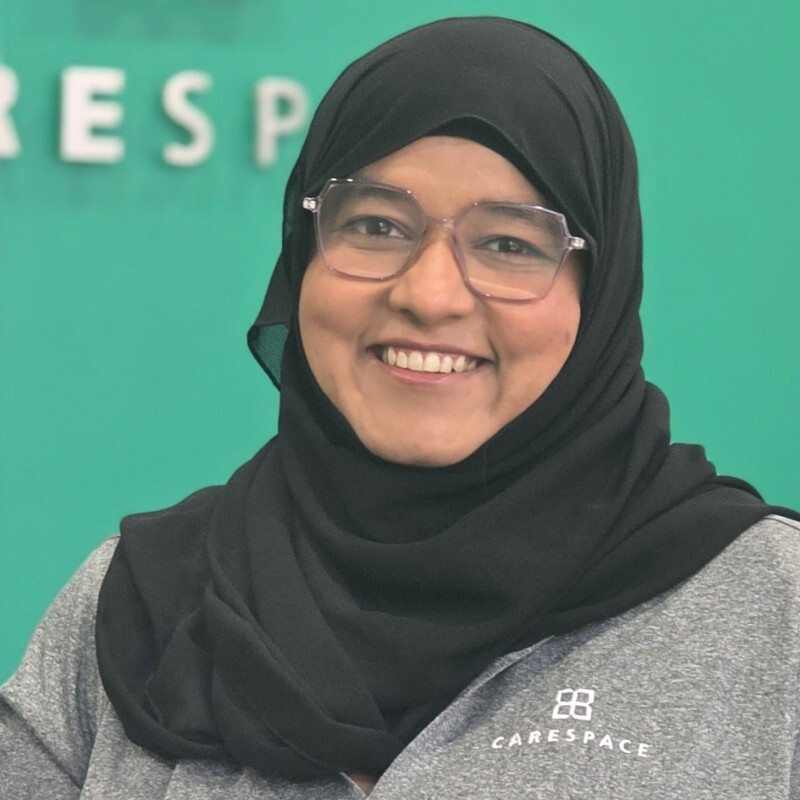
Ummehani Rehmani, BSc, MSc, RP (Qualifying)
When anxiety, past experiences, or questions of faith leave you feeling overwhelmed, Ummehani helps you find a steadier way forward
You may be functioning on the outside while feeling anxious, emotionally exhausted, disconnected, or uncertain underneath. Perhaps your mind rarely slows down, a relationship or life transition has unsettled your sense of direction, or past experiences continue to shape how safe, confident, and understood you feel. Ummehani Rehmani, BSc, MSc, RP (Qualifying), offers a warm and culturally responsive approach to counselling in Kitchener where you can speak openly without having to minimize the parts of your story that matter.Ummehani’s trauma-informed and faith-based approach is especially meaningful when your experiences cannot be separated neatly from culture, family expectations, community, identity, or spiritual beliefs. Whether you want faith to be an active part of therapy or simply need to know that your values will be respected, she meets you without assumptions. You do not need to have the right words, a clear goal, or everything figured out before you begin. Therapy can start with what feels most present right now.
Ummehani Rehmani, BSc, MSc, RP (Qualifying), combines comprehensive psychotherapy with more than a decade of experience across mental health, education, and behavioural support
Ummehani provides broad psychotherapy support for concerns such as anxiety, depression, emotional overwhelm, relationship difficulties, life transitions, parenting stress, identity, belonging, and personal growth. Her areas of focus add depth to this general foundation rather than limiting who she can support.Across more than ten years of work in psychotherapy, behavioural therapy, clinical psychology, education, and student support, Ummehani has worked with adults, adolescents, children, families, and neurodivergent populations in varied cultural settings. That range has taught her to look beyond a single symptom and consider how your relationships, learning history, environment, culture, nervous system, and daily responsibilities may interact. She speaks English, Urdu, and Hindi, which can make it easier to express culturally specific ideas, family dynamics, and emotionally complex experiences with greater comfort and precision.
Therapy with Ummehani gives you room to slow down, understand the pattern, and build practical change at a pace that feels safe
Your work together begins with careful listening. Ummehani takes time to understand what is happening, how it is affecting your life, what has helped before, and what you hope will be different. Rather than applying a one-size-fits-all method, she collaborates with you to create goals that feel realistic, personally meaningful, and connected to your values.Her approach to counselling is eclectic and integrative, drawing from existential and psychodynamic approaches, Cognitive Behavioural Therapy (CBT), DBT-informed interventions, somatic techniques, and trauma-informed care. She thoughtfully integrates these approaches based on each client’s unique needs, experiences, and goals.
At CARESPACE Victoria North, Ummehani also values coordinated care. When appropriate and with your consent, she can collaborate with other members of your CARESPACE team so that emotional, physical, and lifestyle concerns are not treated as unrelated pieces of your well-being.
Her training in counselling psychology, clinical psychology, education, and behavioural therapy gives you emotional depth supported by practical clinical skill
Ummehani holds a Master of Counselling from City University, a Master of Science in Foundations of Clinical Psychology and Health Services from Goldsmiths, University of London, and a Bachelor of Science in Psychology and Human Resource Management from Middlesex University in Dubai. She also completed postgraduate education training through the University of Nottingham and is registered with the College of Registered Psychotherapists of Ontario as a Registered Psychotherapist (Qualifying).Her professional background includes mental health counselling, a clinical psychology internship involving therapy, assessment, research, and report writing, and extensive work in behavioural and educational settings. As a trained ABA therapist, she supported children with autism and learning differences in home and school environments, worked alongside speech and occupational therapists, and helped families carry strategies into everyday routines. She is also Gottman Level 2 trained, strengthening her ability to understand communication patterns, emotional disconnection, and recurring conflict within close relationships. Together, this training helps her bring structure to complex concerns without losing sight of the person behind them.
Her trauma-informed, faith-based, and anxiety-focused care helps you feel safer in therapy without asking you to leave your values or history at the door
Anxiety does not always look like panic. It may appear as constant overthinking, perfectionism, irritability, physical tension, indecision, difficulty sleeping, avoidance, people-pleasing, or a persistent sense that something could go wrong. You may understand logically that you are safe while your body remains alert, or know what you want to change while feeling unable to take the first step. Ummehani helps you slow these experiences down so they can be understood rather than judged.A trauma-informed approach means you are not pressured to disclose more than you are ready to share. Ummehani pays attention to emotional and physical signs of distress, prioritizes choice and collaboration, and helps you build stability before moving into experiences that feel vulnerable. Through cognitive, emotional, behavioural, and somatic strategies, you may work on recognizing triggers, challenging anxious predictions, regulating intense emotions, setting boundaries, communicating your needs, and responding to yourself with greater compassion.
Faith-based care is available when spirituality or religious belief is meaningful to you. It does not mean that any belief system is assumed, prescribed, or imposed. Instead, faith can be welcomed as part of how you understand purpose, relationships, identity, responsibility, hope, grief, or healing. You may want to explore tension between personal needs and family or community expectations, guilt or shame connected to belief, questions of belonging, or ways your values can guide decisions during change. Ummehani creates room for these conversations while keeping therapy grounded in your goals and lived experience. When faith is not part of what you want to discuss, your beliefs are still respected without becoming the focus.
Whatever brings you to therapy, Ummehani’s goal is not to change who you are. It is to help you understand yourself more clearly, strengthen the capacities you already carry, and move toward a life that feels more grounded, connected, and authentic.