
Sameer Mian, BHSc (Hons), DO
When pain starts changing how you move, work, sleep, or train, Sameer looks beyond the sore spot to understand why it keeps returning
When your low back tightens every time you stand, your shoulder will not move comfortably, or wrist pain makes ordinary tasks harder, you need more than a quick attempt to quiet the symptom. Sameer Mian, BHSc (Hons), DO, brings the perspective of a U.S.-trained Doctor of Osteopathic Medicine with two years of postgraduate clinical experience in comprehensive musculoskeletal assessment and Osteopathic Manipulative Treatment. He works to understand how your painful area relates to the rest of your body—and to the way you live, move, recover, and respond to physical demands.Rather than treating one muscle or joint in isolation, Sameer considers how movement restrictions, connective tissue tension, joint mechanics, nerve irritation, posture, activity patterns, stress, and wider health factors may be interacting. If you are searching for an osteopath in Waterloo, you can expect care that begins with careful listening, proceeds through a thorough assessment, and leads to a plan built around the changes that matter most to you.
Sameer Mian, BHSc (Hons), DO, brings hands-on osteopathic care together so your plan is both clinically grounded and practical
As an Osteopathic Manual Practitioner, Sameer provides comprehensive osteopathic care for a broad range of acute, chronic, and functional musculoskeletal concerns. His particular depth in low back, shoulder, and wrist pain sits on top of that wide general-care foundation, so you can still see him when your concern does not fit neatly into one category.His training allows him to connect hands-on findings with a broader understanding of anatomy, physiology, movement, and whole-person health. His comprehensive understanding also supports thoughtful clinical reasoning when pain may involve more than a local tissue problem. You receive an approach that is goal-oriented without being rushed, evidence-informed without becoming impersonal, and focused on helping you understand what may be contributing to your symptoms. Sameer’s role is not simply to perform a technique; it is to help you make sense of what your body is communicating and build a realistic path toward better mobility, function, and confidence.
Your first visit is a careful investigation, not a rushed treatment built around a one-size-fits-all protocol
Sameer begins by learning what you feel, when it started, what aggravates or eases it, and how it is affecting your work, sleep, exercise, caregiving, or daily routines. He then uses osteopathic structural and biomechanical assessment to examine movement restrictions, functional impairments, and possible contributing factors. Your goals guide the process, whether you want to bend and lift more comfortably, return to training, tolerate your workday, sleep with less disruption, or complete everyday tasks without guarding against pain.Treatment may include myofascial release, muscle energy, counterstrain, soft-tissue mobilization, or other osteopathic techniques selected for your presentation and comfort. Within osteopathy at CARESPACE, that hands-on work is only one part of a coordinated plan. Sameer also emphasizes clear education, posture and movement guidance, activity modification, injury-prevention strategies, and practical self-management. When another discipline could add value, he can collaborate with your CARESPACE team so that your care remains connected rather than fragmented.
Extensive medical education and postgraduate experience give you both clinical depth and a practical plan forward
Sameer earned his Doctor of Osteopathic Medicine degree from Kansas City University, a COCA-accredited osteopathic medical school, and passed all three levels of the United States national comprehensive osteopathic licensing examinations. He then completed two years of postgraduate clinical training at Southern Illinois University, where he managed a high-volume practice and worked with acute, chronic, postpartum, and functional musculoskeletal concerns.Before medical school, he completed an Honours Bachelor of Health Sciences at Western University, earning Dean’s Honour List recognition and the Queen Elizabeth II Aiming for the Top Scholarship. He has also pursued an MBA focused on artificial intelligence, adding a systems-oriented perspective to his experience in clinical care and practice operations. At CARESPACE Weber North, this combination supports organized decision-making, measurable goals, and care that stays centred on your progress.
Low back, shoulder, and wrist pain receive particular attention—especially when muscles, joints, and nerves may all be involved
While Sameer works with a wide range of musculoskeletal concerns, he brings particular interest to pain that is persistent, mechanically complex, or difficult to explain through one structure alone. That includes low back pain, wrist pain, shoulder pain, and discomfort with neuropathic, muscular, or joint-related features.With low back pain, the location of the ache is only the beginning of the assessment. Your symptoms may change with sitting, standing, bending, lifting, walking, or turning in bed. Sameer looks at how the lumbar spine is moving, while also considering the hips, pelvis, thoracic region, surrounding soft tissues, breathing mechanics, and the demands placed on your body throughout the day. When relevant, treatment and education are directed toward the restrictions and habits most closely connected to your goals, rather than relying on a routine sequence that is applied to everyone.
Shoulder and wrist pain can be equally interconnected. Repetitive work, prolonged computer use, lifting, training, an old injury, or compensation elsewhere may influence how your arm functions. Sameer may assess the neck, upper back, ribs, shoulder blade, shoulder joint, elbow, forearm, wrist, and hand to understand where movement is being lost or load is being transferred. This broader view is especially useful when the site that hurts may not be the only area contributing.
When pain has nerve-like qualities—such as burning, tingling, numbness, sensitivity, or symptoms that travel—Sameer considers those features carefully rather than treating them as ordinary muscle tension. Hands-on care is not appropriate for every cause of neuropathic pain, so responsible assessment also means recognizing when further medical evaluation or coordinated care may be needed.
Your plan may combine gentle manual techniques with education and changes to movement or activity. The aim is not to chase temporary relief alone. It is to help you move more freely, tolerate daily demands more comfortably, understand what affects your symptoms, and gain useful strategies for protecting your progress between visits.
You do not have to keep adjusting your life around pain—your next step can start today
Book your first visit with Sameer today and take a measured, informed step toward moving with more confidence, understanding your pain more clearly, and reclaiming the activities pain has begun to limit.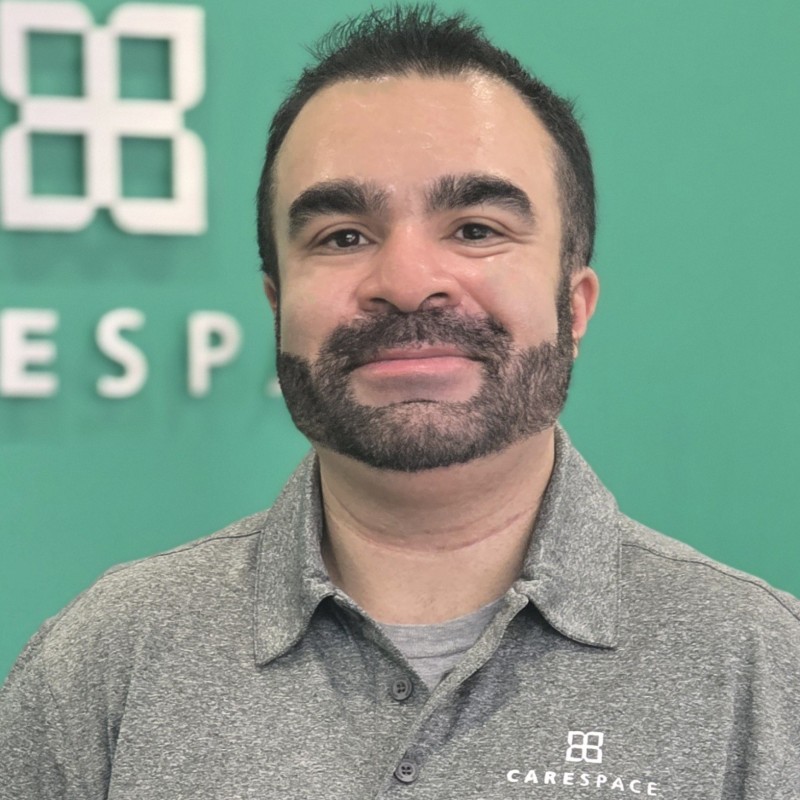
Sameer Mian, BHSc (Hons), DO
Osteopathic Manual Practitioner
CARESPACE Weber North