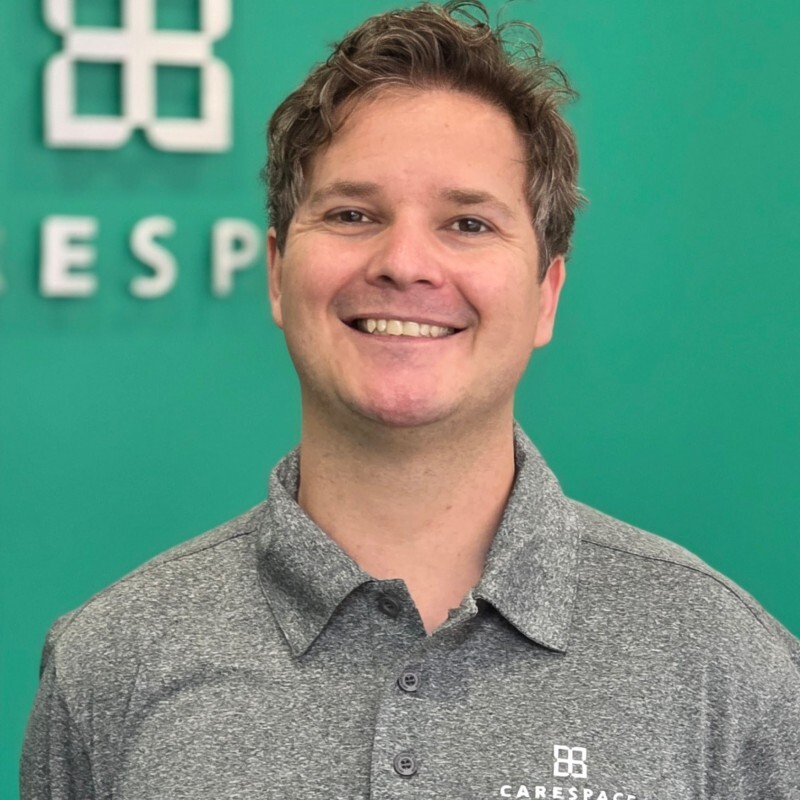
Myles Pye, OMP, M.OMSc
When pain or restricted movement starts shrinking your day, Myles Pye, OMP, M.OMSc., helps you understand why.
When pain, stiffness, or restricted movement begins to interfere with ordinary things—washing your hair, walking your dog, getting through a shift, or moving without hesitation—you want more than a quick treatment. You want someone who will listen, explain what may be happening, and help you understand why the problem keeps returning. Myles Pye, OMP, M.OMSc., brings that combination of careful listening and analytical problem-solving to every appointment.As a Kitchener osteopath, Myles combines four years of formal osteopathic education with a physiotherapy and rehabilitation background dating back to 2010. He looks beyond the area that hurts to understand how the rest of your body may be adapting, guarding, or compensating. That whole-body perspective can be valuable when soreness comes and goes, movement no longer feels natural, or previous appointments have left you without the clarity you were seeking. From the beginning, Myles wants you to feel heard, taken seriously, and actively involved—because understanding your body is part of building confidence in it again.
Myles combines rehabilitation experience, osteopathic reasoning, and a problem-solver’s mind to provide care shaped around you.
Myles Pye, OMP, M.OMSc., provides comprehensive manual osteopathic care for a wide range of pain, tension, mobility, and day-to-day function concerns. His work is not limited to one body area, one age group, or one type of presentation. Instead, he considers how your anatomy, physiology, daily demands, and current movement patterns may be influencing one another.What makes Myles distinctive is the foundation he built before becoming a Manual Osteopathic Practitioner. His work alongside physiotherapists began in 2010, when he started helping develop and guide exercise plans around individual needs. His experience spans private clinics, long-term care, retirement care, mental health, workplace injury, motor vehicle accident recovery, and aquatic therapy. That breadth gives him a practical understanding of how differently pain and movement limitations can affect your life—and why your plan must be shaped around you rather than a standard formula.
Your first appointment builds a complete picture, then turns it into a clear plan you can understand.
Myles starts with a comprehensive assessment and full health history so he can understand not only where you feel discomfort, but also how it affects your routines, movement, confidence, and goals. He invites you into the conversation, explains what he is noticing, and helps you understand what to expect as your care plan progresses. You are not left guessing about why something is being addressed or where your treatment is headed.His approach to osteopathic care is tissue-dependent, so the direction and pace of treatment are guided by how your body responds rather than by a fixed sequence. Early care may focus on calming protective tension and guarding so movement can feel less threatening and your body can respond more comfortably. Myles also helps you recognize compensation patterns, understand when added support may be useful, and feel better prepared to advocate for yourself within the healthcare system.
At CARESPACE Fischer Hallman, this person-focused approach fits within a coordinated, evidence-based model. When another discipline could add value, your care can connect with the broader CARESPACE team rather than remaining isolated.
His education and rehabilitation history give you osteopathic care grounded in formal training and real-world experience.
Myles completed Physiotherapist Assistant training at Everest College in 2010, then studied at the Canadian Academy of Osteopathy from October 2021 through August 2025. He holds the M.OMSc. designation, is in good standing with OSTCAN, has professional liability insurance, and has completed Standard First Aid and Level C CPR training. These qualifications support care that is professionally grounded and informed by both formal study and hands-on experience.His professional path began with physiotherapy assistant roles at Greystone/Brantford Physiotherapy and Sports Medicine and the Canadian Back Institute. Since 2022, he has worked at Centreline Physio, Sports & Wellness as a physiotherapy and operations assistant, adding his role as a Manual Osteopathic Practitioner in 2025. He also spent eight years in automotive manufacturing line work, giving him firsthand appreciation for repetitive physical demands, long shifts, and the way work can gradually influence comfort and movement. That range helps him connect clinical findings with everyday physical realities.
While Myles provides broad osteopathic care, his deepest strength is finding the compensation patterns that keep tension and restricted movement in motion.
Your body is remarkably adaptable. When one area is irritated, limited, or under strain, another may begin doing more to keep you moving. That compensation can be useful at first, but the tissues taking on extra work may eventually become tired, tense, or sore. Over time, what began as one problem can feel like a chain reaction: movement becomes less natural, your body guards more quickly, and you may become unsure of what is safe.Myles brings particular depth to understanding these patterns. He looks at relationships across the body rather than assuming the most painful spot tells the whole story. His assessment considers how you move, where your body appears to protect itself, and how different tissues respond. Treatment is then adapted to what your body is ready to accept. The aim is not to force movement past a protective barrier, but to reduce unnecessary guarding, make movement feel more approachable, and help you understand your true capacity.
This work can be especially meaningful when discomfort is persistent or episodic, tightness seems to travel or return, or daily activities have become harder than they should be. Progress may show up in practical ways: reaching overhead with less hesitation, turning or walking more freely, getting through work with greater confidence, or returning to routines that pain had started to complicate.
Myles teaches as he works. He helps you understand how compensation develops, what early changes are worth noticing, and when it may be time to seek support instead of waiting for the pattern to spread. His experience with ages ranging from toddlers through older adults reinforces a central part of his practice: care must adapt to you. Whether your concern is new, recurring, or difficult to explain, you can expect a calm process, transparent communication, and a plan connected to what you need your body to do in real life.