
Benjamin Weiler, R.Kin
If you’re looking for a personal trainer in Waterloo, you deserve someone who understands your body — not just your workout.
If you’re searching for a personal trainer in Waterloo, you probably don’t want a generic program or someone who simply counts reps. You want guidance that makes sense for your body, your goals, and whatever is standing in your way right now — whether that’s pain, stiffness, reduced balance, low confidence, recovery after injury, or the challenge of exercising safely with a neurological condition. Benjamin Weiler, R.Kin, is the kind of practitioner who helps you feel supported from the start.As a Registered Kinesiologist and personal trainer, Benjamin Weiler, R.Kin, combines movement science with practical coaching so your sessions are not just challenging — they’re purposeful. Ben’s focus is helping you move safely, build real-world strength, and regain confidence in what your body can do. Whether you want to return to activity, reduce fall risk, improve mobility, or finally feel sure you’re exercising the right way, he meets you where you are and helps you move forward with clarity, structure, and encouragement.
Benjamin Weiler, R.Kin, brings the clinical movement insight of a Registered Kinesiologist to personal training, so every session has a purpose.
Benjamin Weiler, R.Kin, provides comprehensive personal training and exercise-based care for a wide range of goals, from general strength and conditioning to balance, mobility, injury recovery, and long-term health support. What makes his approach stand out is the depth behind it. A Registered Kinesiologist studies biomechanics, exercise prescription, functional movement, and how injury, pain, chronic illness, and neurological change affect the body.For you, that means safer progressions, smarter modifications, better technique coaching, and a plan that reflects real life rather than a one-size-fits-all routine. Many personal trainers can motivate you through a workout. Ben also helps you understand why an exercise belongs in your program, how it connects to your goals, and when it should be adjusted. That difference matters when you want personal training that feels encouraging, evidence-based, and genuinely built around your body.
From your first session onward, Ben helps you understand what you’re doing, why it matters, and how it fits your life.
When you work with Ben, the first step is understanding the full picture. He looks at your health history, movement patterns, strength, balance, mobility, exercise background, and the everyday activities you want to do more easily. From there, he builds a plan that is realistic enough to follow and progressive enough to create measurable change. That is what thoughtful personal training should feel like: individualized, grounded in evidence, and paced in a way that builds confidence instead of frustration.Ben is known for clear communication and calm coaching, which is especially helpful when you’re learning new movements, returning after time away, or managing a more complex condition. He emphasizes proper technique, functional movement, and steady progression so you can improve without feeling rushed or overwhelmed. And because better outcomes often come from coordinated care, he works within the collaborative model at CARESPACE Weber North, where your exercise plan can align with the rest of your care when needed.
His experience across rehabilitation, long-term care, ergonomics, and movement science gives you guidance that works in the real world.
Ben’s training in kinesiology and exercise science at the University of Waterloo gives him a strong foundation in anatomy, biomechanics, and evidence-based exercise prescription. What elevates that foundation is the range of settings where he has applied it. In long-term care and student therapist roles, he guided older adults through walking, standing, balance, range-of-motion, and exercise sessions adapted to different abilities. In community stroke programming, he worked one-on-one with participants to support safe movement, clear understanding, and steady progression.Through physiotherapy shadowing, he gained exposure to the clinical reasoning behind rehab-focused exercise. In ergonomics roles within manufacturing environments, he assessed injury risk, observed movement demands, and saw firsthand how repetitive work and poor mechanics can affect function over time. Combined with CPR and Basic Life Support certification, that experience gives you a practitioner who treats exercise like a precise tool for better movement — not a guessing game.
If a neurological condition has changed how you move, Ben focuses on helping you rebuild strength, balance, and trust in your body.
In addition to providing comprehensive personal training, Ben brings particular depth in exercise support for stroke, Parkinson’s disease, and other neurological disorders. These conditions can affect much more than strength. They can change how you walk, balance, coordinate movement, respond to challenges, get up from a chair, climb stairs, turn safely, or trust your body in busy environments. Ben’s approach starts with function: what is hardest right now, what matters most to you, and what kind of exercise will help you move through daily life with more control and less hesitation.For stroke recovery, that may mean focused work on balance, lower-body strength, coordination, gait, endurance, and movement retraining so everyday tasks feel safer and more manageable. For Parkinson’s disease, it can include posture, mobility, large-amplitude movement, cueing strategies, strength work, and exercises that support stability, confidence, and ongoing independence. With other neurological disorders, Ben adapts the program to your presentation, energy, and goals so the plan challenges you appropriately without sacrificing safety or clarity.
This specialty matters because the right personal trainer does more than guide a workout. A personal trainer with kinesiology training understands how to scale exercise, how to spot compensations, how to reinforce better movement patterns, and how to progress you without creating unnecessary setbacks. Ben’s experience working one-on-one with stroke participants and supporting older adults with mobility and cognitive challenges has shaped a calm, attentive style that breaks movements down into manageable steps and keeps progress meaningful in real life.
At the same time, his broader practice means you’re never boxed into one category. Whether you want to reduce fall risk, build strength, improve balance, return to exercise after a setback, or simply feel stronger and more capable day to day, Ben offers personal training that respects both your current limitations and your long-term potential.
You can feel Ben’s calm, encouraging style because movement and service have shaped who he is for years.
Outside his formal training roles, Ben has stayed closely connected to movement through intramural sports and club involvement, including soccer, volleyball, squash, badminton, ping-pong, and muay thai. He has also taken on supportive community roles through university leadership and health-focused volunteering. That mix of active living and service-mindedness comes through in his sessions: you get someone who is approachable, steady, and genuinely invested in helping you feel more confident in your body.The sooner you start with the right guidance, the sooner everyday life can start to feel easier again.
Book with Ben today if you’re ready for personal training in Waterloo that is thoughtful, evidence-based, and built around real function — because the longer you wait, the longer pain, imbalance, or uncertainty gets to set the pace.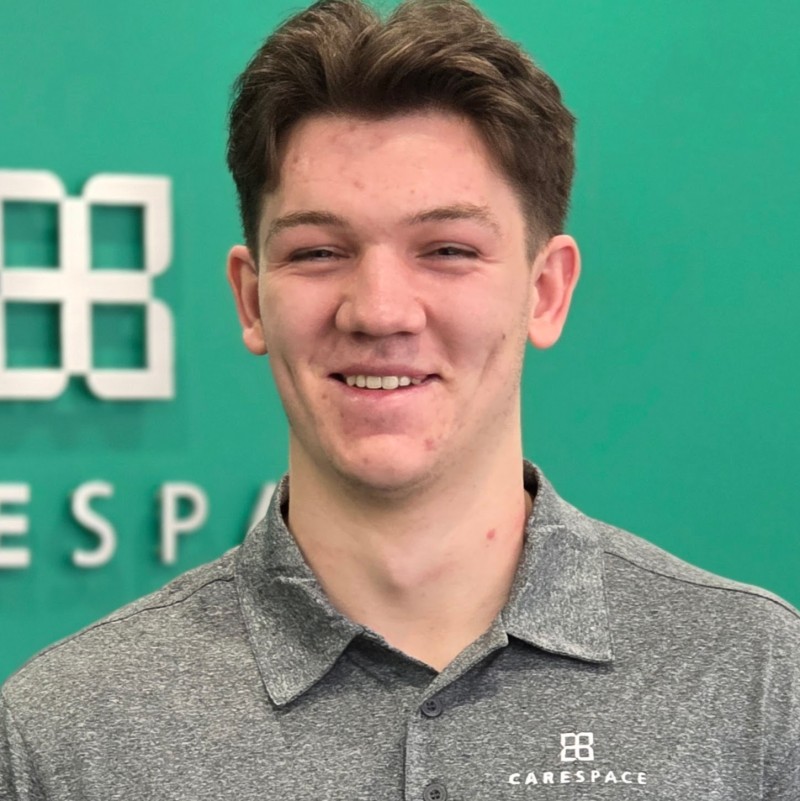
Benjamin Weiler, R.Kin
Fitness Trainer
Kinesiologist
CARESPACE Weber North