
Gastric Ulcers – Symptoms, Causes, and Treatment Options
Gastric ulcers are painful sores that form in the lining of your stomach. They are a type of peptic ulcer and are often linked to burning stomach pain, nausea, bloating, and in severe cases, bleeding. Because they can interfere with eating, sleeping, and daily comfort, understanding their causes, symptoms, and risks is important for timely care.
Gastric ulcers often respond well to naturopathic medicine, which may include natural strategies, stress management, and lifestyle changes to support healing. Guidance from a nutritionist can help identify trigger foods, create personalized meal plans, and promote long-term digestive health. Care is tailored to improve comfort and overall well-being.
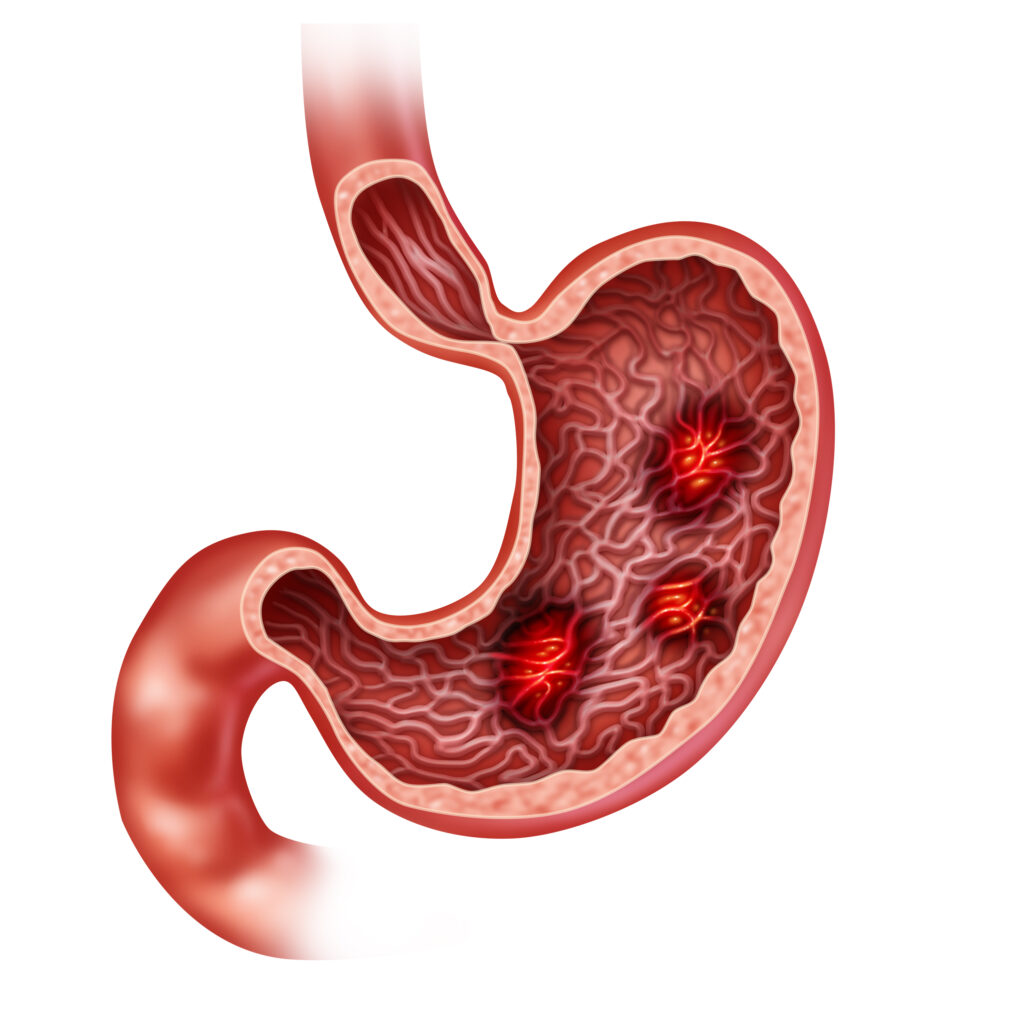
Overview of Gastric Ulcers
Gastric ulcers are open sores that develop in the stomach lining, usually due to a breakdown in the protective barrier that shields your stomach from its own digestive acids.
What exactly is a gastric ulcer?
A gastric ulcer occurs when stomach acid damages the lining of your stomach. Normally, a protective layer of mucus keeps acid from irritating the stomach wall. But when this balance is disrupted—by infection, medications, or lifestyle factors—the stomach lining becomes vulnerable. Over time, this damage can lead to an ulcer, which may cause sharp, burning, or gnawing pain.
How common are gastric ulcers?
- Prevalence: Research suggests that peptic ulcers affect about 5–10% of people worldwide at some point in their lives. Gastric ulcers are slightly less common than duodenal ulcers but still affect millions globally.
- Age and gender: They can occur at any age but are more common in adults over 40. Both men and women are affected, though historically men were more often diagnosed, partly due to higher rates of smoking and alcohol use.
Reference: Lanas, Á., & Chan, F. K. L. (2017). Peptic ulcer disease. The Lancet, 390(10094), 613–624.
Impact on daily life
Living with a gastric ulcer can be challenging. The burning stomach pain often worsens after eating, making people fearful of meals. Sleep may be disrupted by night-time pain, and fatigue is common due to poor nutrition or blood loss in more severe cases. Work and social activities may suffer if symptoms become frequent. Additionally, the anxiety of not knowing whether the ulcer is healing or worsening can impact mental health and quality of life.
Symptoms of Gastric Ulcers
The hallmark symptom of a gastric ulcer is a burning or gnawing pain in the upper abdomen, often occurring soon after eating.
What are the main symptoms of gastric ulcers?
Common symptoms include:
- Burning stomach pain (typically felt between the breastbone and navel)
- Nausea or vomiting
- Loss of appetite or weight loss
- Bloating, belching, or feeling full quickly
- Fatigue (if anemia develops due to slow bleeding)
The pain often follows a pattern—worsening after meals in gastric ulcers, while duodenal ulcers (in the small intestine) often improve briefly with eating.
Red flag signs to watch for
While most gastric ulcers are manageable, some symptoms need urgent medical attention:
- Vomiting blood (may look like coffee grounds)
- Black, tarry stools (indicating internal bleeding)
- Sudden, severe abdominal pain (possible perforation of the stomach wall)
If you experience these, seek immediate medical care.
Functional impacts
- Work & productivity: Chronic pain and fatigue can reduce focus and job performance.
- Sport & exercise: Physical exertion may worsen discomfort, leading to reduced participation.
- Sleep: Night pain can cause insomnia and restlessness.
- Mental health: Long-term discomfort may contribute to anxiety, irritability, or even depression.
Causes and Risk Factors for Gastric Ulcers
Most gastric ulcers are caused by either infection with Helicobacter pylori bacteria or regular use of non-steroidal anti-inflammatory drugs (NSAIDs) such as ibuprofen or aspirin.
What causes gastric ulcers?
- Helicobacter pylori (H. pylori):
- This spiral-shaped bacterium weakens the protective stomach lining, allowing acid to cause damage.
- H. pylori infection is a leading cause worldwide.
- NSAID medications:
- Regular or high-dose use of pain relievers like ibuprofen, naproxen, or aspirin can damage the stomach lining by reducing protective mucus.
- Excess stomach acid:
- Though less common, conditions that increase acid production (like Zollinger-Ellison syndrome) may contribute.
What increases the risk of gastric ulcers?
Risk factors include:
- Age: Higher risk after age 40.
- Smoking: Increases acid production and slows healing.
- Alcohol use: Irritates the stomach lining and delays recovery.
- Stress: Does not directly cause ulcers but may worsen symptoms.
- Family history: A genetic predisposition may exist.
- Other medical conditions: Such as liver disease, Crohn’s disease, or previous stomach surgery.
Although these conditions share overlapping symptoms like burning pain and nausea, gastric ulcers involve structural damage that requires careful monitoring and treatment.
References
Sung JJ, Kuipers EJ, El-Serag HB. (2009). Systematic review: the global incidence and prevalence of peptic ulcer disease. Lancet. 374(9699):1449–1461. DOI: 10.1016/S0140-6736(09)60946-6
Diagnosis, Recovery, and Management of Gastric Ulcers
Gastric ulcers are painful sores in the stomach lining that require careful diagnosis, treatment, and follow-up to prevent complications. This section explains how doctors identify gastric ulcers, what recovery typically looks like, and practical management strategies you can use to feel better and reduce the risk of recurrence.
Diagnosis of Gastric Ulcers
Gastric ulcers are diagnosed through a combination of symptom review, physical examination, and tests such as endoscopy and lab work.
How do doctors test for gastric ulcers?
Doctors usually begin with a conversation about your symptoms—burning stomach pain, nausea, or unexplained weight loss. They’ll ask when the pain occurs, whether it gets worse after eating, and whether you’ve noticed blood in vomit or stool.
Next, they may perform:
- Physical exam: Gentle pressure on your abdomen may help locate areas of tenderness.
- Blood, stool, or breath tests: These detect Helicobacter pylori (H. pylori), a common bacterial cause of ulcers.
- Endoscopy: A thin, flexible tube with a camera is inserted through your throat to view the stomach lining directly. Biopsies (small tissue samples) may be taken to rule out cancer.
- Upper GI series (barium swallow): Less common now, this imaging test uses contrast material and X-rays to show ulcers.
How do doctors find the root cause of gastric ulcers?
The goal of diagnosis isn’t just to confirm an ulcer but to identify why it developed. If H. pylori is present, antibiotic treatment is required. If NSAID use is the cause, your doctor may recommend stopping or switching medications. In rare cases, ulcers may result from other conditions, such as tumors or Zollinger-Ellison syndrome, which leads to excessive stomach acid production.
How is a gastric ulcer different from gastritis or reflux?
- Gastric ulcer: Open sore in the stomach lining.
- Gastritis: Inflammation of the stomach lining without ulceration.
- GERD (acid reflux): Acid escapes into the esophagus, causing heartburn.
While symptoms overlap, endoscopy helps distinguish between these conditions, ensuring you get the right treatment.
Reference: Malfertheiner P. et al. (2017). Management of Helicobacter pylori infection—the Maastricht V/Florence Consensus Report. Gut. 66(1):6-30. DOI: 10.1136/gutjnl-2016-312288
Recovery Timeline for Gastric Ulcers
Most gastric ulcers heal within 4–8 weeks with appropriate treatment, but recovery can vary depending on severity, cause, and lifestyle factors.
How long does a gastric ulcer take to heal?
- Mild cases: With medication (like proton pump inhibitors), ulcers may begin healing within 2 weeks and fully resolve in 4–6 weeks.
- Moderate cases: If ulcers are larger or caused by ongoing NSAID use, recovery may take 6–8 weeks.
- Severe or complicated cases: Ulcers with bleeding, perforation, or scar tissue may require hospitalization, surgery, or longer recovery times of several months.
What factors affect recovery?
- Continued NSAID use slows healing.
- Smoking and alcohol delay recovery.
- Untreated H. pylori infections cause recurrence.
- Poor diet, stress, and lack of follow-up may also worsen prognosis.
Return to normal life
- Work: Most people can return to work during treatment, though fatigue or pain may require short-term adjustments.
- Sport/exercise: Light activity is safe, but strenuous exercise should be avoided until pain subsides.
- Long-term outcomes: With treatment, most ulcers heal completely, but up to 20% may recur within a year if risk factors aren’t addressed.
If/then decision pathway
- If the ulcer is mild and caused by H. pylori → then antibiotics and acid-suppressing drugs are usually enough.
- If the ulcer is related to NSAID use → then stopping the drug or switching is key.
- If bleeding or perforation occurs → then emergency care and possibly surgery are required.
Reference: Lanas A. & Chan FKL. (2017). Peptic ulcer disease. Lancet. 390(10094):613–624. DOI: 10.1016/S0140-6736(16)32404-7
How to Manage Gastric Ulcers
Managing gastric ulcers involves medication, lifestyle changes, and prevention strategies to stop them from coming back.
What’s the best way to manage gastric ulcers at home?
Doctors usually prescribe:
- Proton pump inhibitors (PPIs): Reduce acid production and allow the ulcer to heal.
- Antibiotics: Kill H. pylori bacteria when present.
- Protective medications: Like sucralfate, to coat the stomach lining.
But your daily habits play a major role in recovery:
- Avoid smoking and alcohol.
- Limit spicy, acidic, or greasy foods that irritate your stomach.
- Eat smaller, more frequent meals instead of large ones.
- Reduce stress through relaxation or gentle exercise.
Self-help & relief tips
- Eat smart: Choose bland, soft foods like bananas, rice, and oatmeal during flare-ups.
- Stay upright: Avoid lying down for 2–3 hours after meals.
- Protect your stomach: If you must take NSAIDs, use the lowest dose and take with food (but only under medical guidance).
- Hydrate: Drink enough water to support digestion and healing.
- Rest: Good sleep helps your body repair the stomach lining.
Lifestyle and long-term strategies
- Core strength & posture: While not directly related, maintaining good abdominal support reduces pressure on the stomach.
- Community & support: Talking with others who’ve had ulcers or working with a dietitian can improve adherence to recovery plans.
- Relapse prevention: Regular check-ups are essential, especially if you have recurring symptoms.
Multidisciplinary Coordinated Care for Gastric Ulcers at CARESPACE
At CARESPACE, gastric ulcer treatment is not just about healing the stomach—it’s about treating the whole person. Our multidisciplinary approach integrates physical care, nutrition, stress management, and lifestyle coaching to provide a coordinated plan designed for faster recovery and long-term prevention.
How does CARESPACE treat gastric ulcers differently?
Most standard care focuses only on medication to reduce stomach acid or eliminate H. pylori. While these steps are essential, they don’t address the broader lifestyle and emotional factors that contribute to ulcers. At CARESPACE, you benefit from a team of professionals working together—including physiotherapists, chiropractors, massage therapists, psychotherapists, dietitians, and naturopathic doctors—so you receive comprehensive care in one place.
For example, you might see a dietitian to adjust your diet, a psychotherapist to manage stress and insomnia, and a physiotherapist to help with posture and body mechanics that may affect digestion. This integrated strategy goes beyond single-discipline treatment and creates a personalized recovery pathway.
Why does a team approach help gastric ulcers recover faster?
Gastric ulcers often involve multiple factors—bacterial infection, stress, diet, and medication use. Treating only one element may provide short-term relief, but a team approach addresses root causes and reduces recurrence risk.
- Nutrition and naturopathy: A dietitian can create meal plans to reduce stomach irritation, while a naturopathic doctor may suggest evidence-based supplements to support healing.
- Psychotherapy and coaching: Stress and anxiety can worsen ulcer symptoms. Counseling or mental performance coaching helps you build resilience, improve sleep, and reduce flare-ups.
- Physiotherapy and fitness training: Proper movement and posture reduce abdominal pressure and support better digestion.
- Massage therapy and acupuncture: These therapies can ease tension, improve circulation, and support relaxation, which helps the stomach heal.
Compared to a single-discipline approach, this coordinated care model means you don’t have to piece together solutions—you get an integrated plan tailored to your needs.
What does a typical care journey for gastric ulcers look like at CARESPACE?
Your journey moves through three phases: acute, subacute, and maintenance. Each phase is guided by the team, with ongoing adjustments to match your progress.
- Acute phase (immediate relief): You may begin with a medical review and nutritional adjustments, while also learning stress reduction techniques. Pain relief strategies—like relaxation exercises or massage therapy—are introduced.
- Subacute phase (healing and strengthening): As symptoms improve, physiotherapy or light exercise programs may be added to help restore energy and resilience. Psychotherapy or coaching can address the mental load of living with a chronic condition.
- Maintenance phase (prevention and long-term wellness): The team focuses on relapse prevention. Nutrition plans are fine-tuned, exercise becomes routine, and stress management strategies are reinforced to prevent recurrence.
A hypothetical example: someone experiencing sharp stomach pain and stress-related insomnia may first see a dietitian and psychotherapist. Once acute symptoms are managed, they are referred to physiotherapy for posture optimization and fitness training for long-term digestive support.
Coordinating mental health and gastric ulcer care
Stress and insomnia often go hand-in-hand with gastric ulcers. At CARESPACE, mental health professionals collaborate with dietitians and coaches to create strategies for coping, sleeping better, and breaking the cycle of pain and anxiety.
- Psychotherapy helps reduce stress that contributes to excess stomach acid.
- Mind-body practices like relaxation techniques and acupuncture promote calm and aid healing.
- Sleep coaching addresses insomnia so your body has the chance to repair the stomach lining.
Why CARESPACE’s coordinated model is unique
Most healthcare systems treat gastric ulcers in isolation—one doctor prescribes medication, and you may be left to figure out the rest on your own. At CARESPACE, you don’t have to navigate this journey alone. Every provider is connected, sharing notes and insights, so your care plan is unified and seamless.
The benefits of this model include:
- Faster recovery times.
- Reduced recurrence rates.
- Whole-person care that considers both physical and psychological well-being.
- A supportive environment where you feel understood, not just treated.
Key Takeaway
At CARESPACE, gastric ulcer treatment is more than symptom control—it’s about whole-body healing and prevention. Through a multidisciplinary team that integrates medical, nutritional, psychological, and physical strategies, you gain the tools to not only recover but also live with confidence, knowing your care is coordinated for long-term health.
Gastric ulcers can mimic or overlap with several other digestive conditions, which is why getting a proper diagnosis is so important. Many conditions share similar symptoms such as abdominal pain, bloating, nausea, and indigestion, and they may coexist with ulcers.
Some related conditions include:
- Duodenal ulcers: Similar to gastric ulcers but located in the first part of the small intestine, often with similar burning pain.
- Gastritis: Inflammation of the stomach lining that may progress to ulcers if untreated.
- Gastroesophageal reflux disease (GERD): Acid reflux can cause chest and upper abdominal discomfort, sometimes mistaken for ulcer pain.
- Functional dyspepsia: Chronic indigestion without a visible ulcer but with similar symptoms.
- Gallbladder disease or pancreatitis: These conditions may also present with upper abdominal pain and must be ruled out.
Understanding these overlaps helps you and your care team develop the right treatment plan.
Looking for information on a different condition? Visit our full Conditions List.
Condition FAQs
The fastest relief for gastric ulcer pain usually comes from reducing stomach acid and avoiding triggers. Medications such as proton pump inhibitors or antacids prescribed by a doctor are often the quickest solutions. At home, avoiding spicy foods, alcohol, smoking, and NSAIDs (like ibuprofen) can ease symptoms. Relaxation techniques, gentle movement, and small, frequent meals may also help.
This content is for informational purposes only and is not a substitute for professional medical advice. If you think you may have gastric ulcers, consult a qualified health provider.
Some small gastric ulcers may heal naturally, especially if the trigger (like NSAID use) is removed. However, most require medical treatment to prevent complications such as bleeding or perforation. Without proper care, ulcers can worsen and lead to serious health risks. Seeing a doctor ensures you get tested for H. pylori, a common bacterial cause, and treated appropriately.
This content is for informational purposes only and is not a substitute for professional medical advice. If you think you may have gastric ulcers, consult a qualified health provider.
You should seek medical attention if you have persistent stomach pain, black or tarry stools, vomiting blood, unexplained weight loss, or difficulty eating. These may be red-flag signs of complications. Even if your symptoms seem mild, a doctor can test for H. pylori and rule out other serious conditions like stomach cancer or pancreatitis. Early care improves recovery and lowers risks.
This content is for informational purposes only and is not a substitute for professional medical advice. If you think you may have gastric ulcers, consult a qualified health provider.
Foods that are gentle on your stomach—like bananas, oatmeal, yogurt, and leafy greens—may support healing. Reducing caffeine, spicy foods, and alcohol is strongly advised. Lifestyle changes such as stress management, quitting smoking, and prioritizing good sleep also play a big role. These habits reduce irritation to your stomach lining and help prevent flare-ups.
This content is for informational purposes only and is not a substitute for professional medical advice. If you think you may have gastric ulcers, consult a qualified health provider.
Stress itself does not directly cause gastric ulcers, but it can make symptoms worse and slow healing. Stress hormones increase acid production and reduce your body’s ability to repair the stomach lining. Many people notice flare-ups during high-stress periods. Relaxation strategies like deep breathing, yoga, or gentle exercise can help reduce symptoms and improve recovery.
This content is for informational purposes only and is not a substitute for professional medical advice. If you think you may have gastric ulcers, consult a qualified health provider.
No, surgery is rarely required for gastric ulcers today. Most ulcers heal with medications, lifestyle changes, and sometimes antibiotics for H. pylori. Surgery is considered only in severe cases where complications occur—such as bleeding, perforation, or when ulcers don’t respond to standard treatment. For the vast majority of people, non-surgical treatment is very effective.
This content is for informational purposes only and is not a substitute for professional medical advice. If you think you may have gastric ulcers, consult a qualified health provider.
The best prevention includes avoiding NSAIDs (or taking them with stomach protection if medically necessary), quitting smoking, limiting alcohol, and managing stress. Treating H. pylori infection completely with prescribed antibiotics is critical. Maintaining a balanced diet and regular check-ups can help prevent recurrence. Prevention is about long-term habits, not just short-term fixes.
This content is for informational purposes only and is not a substitute for professional medical advice. If you think you may have gastric ulcers, consult a qualified health provider.
Both conditions involve stomach acid but affect different areas. Gastric ulcers are open sores in the stomach lining, while GERD is caused by acid flowing back into the esophagus, leading to heartburn and reflux symptoms. Ulcers usually cause more localized stomach pain, while GERD often presents with burning in the chest or throat. Sometimes, the two conditions overlap, so testing is important for accurate treatment.
This content is for informational purposes only and is not a substitute for professional medical advice. If you think you may have gastric ulcers, consult a qualified health provider.
Authorship & Disclaimer
Reviewed by: Ryan Farr, Dietitian
Last Updated: September 25th, 2025
Disclaimer: This content is for informational purposes only and is not a substitute for professional medical advice. If you think you may have gastric ulcers, consult a qualified health provider.