
FOOSH – Symptoms, Causes, and Treatment Options
FOOSH stands for “Fall On an Outstretched Hand.” It describes an injury pattern where you try to break a fall with your hand, which can result in pain, swelling, and damage to the wrist, forearm, elbow, or shoulder. Common outcomes include sprains, fractures, or dislocations.
Many people with a FOOSH injury (fall on an outstretched hand) find relief and recover faster with physiotherapy for FOOSH, where guided exercises and treatments help restore mobility, strength, and function in the wrist, elbow, or shoulder. Chiropractic care for FOOSH can support proper joint alignment and reduce strain on surrounding areas. Massage for FOOSH may ease muscle tightness, reduce pain, and improve circulation to promote healing. Our fitness training for FOOSH provides safe, progressive exercises to rebuild strength and prevent future injuries. Together, these services create a comprehensive approach to recovery so you can return to daily activities with confidence.
Overview of FOOSH
A FOOSH injury occurs when you extend your hand to protect yourself during a fall, leading to force traveling up the arm and into the joints. This protective reflex is natural but can cause damage, especially if the fall is from a height or at high speed.
How common are FOOSH injuries?
FOOSH injuries are among the most common injuries seen in emergency rooms and sports clinics. They affect all age groups, from children falling off playground equipment to adults slipping on ice. According to orthopedic data, wrist fractures (one common result of FOOSH) account for up to 20% of all fractures seen in ERs worldwide. Older adults, particularly those with osteoporosis, are especially vulnerable.
How does a FOOSH injury affect daily life?
The impact depends on the severity of the injury:
- Work: Jobs that require typing, lifting, or using tools may become difficult or impossible.
- Sports: Activities involving the arms, such as tennis, basketball, or gymnastics, are often limited for weeks or months.
- Sleep: Pain and immobility can make it hard to find a comfortable sleeping position.
- Relationships and caregiving: Everyday tasks like cooking, driving, or holding a child may be affected.
- Mental health: Repeated or severe FOOSH injuries can cause frustration, anxiety about falling again, or depression linked to activity limitations.
How is FOOSH different from other injuries?
Unlike a direct blow to the wrist or shoulder, FOOSH is defined by the mechanism of injury—falling on an outstretched hand. It can cause a wide range of injuries, from a mild sprain to complex fractures. The key difference is that FOOSH is not a diagnosis but a description of how the injury happened, guiding doctors to check multiple joints along the arm for damage.
Reference: Court-Brown, C. M., & Caesar, B. (2006). Epidemiology of adult fractures: A review. Injury, 37(8), 691–697. https://doi.org/10.1016/j.injury.2006.04.130
Symptoms of FOOSH
The main symptoms of a FOOSH injury include pain, swelling, bruising, and difficulty moving the affected joint. The exact symptoms depend on what structures are injured.
What are the main symptoms of a FOOSH injury?
- Wrist pain and swelling: Most common, sometimes with deformity if a fracture is present.
- Elbow or forearm pain: May indicate a fracture or dislocation higher up the arm.
- Shoulder pain: Can occur if the force travels up into the shoulder joint.
- Reduced range of motion: Difficulty rotating the wrist, bending the elbow, or raising the arm.
- Numbness or tingling: May suggest nerve involvement.
How severe can FOOSH symptoms be?
The severity ranges from mild sprains that heal within days to serious fractures or ligament tears requiring surgery. Some people can still move the joint with pain, while others cannot use the arm at all.
Red flag symptoms – when to seek medical help
Seek medical attention immediately if you notice:
- Severe pain with obvious deformity
- Inability to bear weight or move the arm
- Significant swelling or bruising
- Numbness, tingling, or coldness in the hand
- Persistent pain lasting more than a few days after the fall
Daily and emotional impact of FOOSH symptoms
- Work: Office workers may struggle with typing, while manual laborers may be unable to use tools.
- Sports: Athletes risk long periods away from competition.
- Sleep: Nighttime pain can reduce rest and recovery.
- Relationships: Dependence on others for daily tasks can strain personal connections.
- Mental health: The sudden loss of independence may lead to stress, frustration, or fear of reinjury.
Reference: Nellans, K. W., Kowalski, E., & Chung, K. C. (2012). The epidemiology of distal radius fractures. Hand Clinics, 28(2), 113–125. https://doi.org/10.1016/j.hcl.2012.02.001
Causes and Risk Factors for FOOSH
A FOOSH injury is caused by falling forward or backward and instinctively reaching out with your hand to break the fall. The energy from the impact transfers through the wrist, forearm, and up to the elbow and shoulder.
What causes FOOSH injuries?
- Slips and trips: On ice, wet floors, or uneven ground.
- Sports: Basketball, football, skateboarding, and gymnastics are high-risk.
- Falls from height: From stairs, ladders, or playground equipment.
- Cycling accidents: Landing on the hands after a crash.
Who is most at risk of a FOOSH injury?
- Children and adolescents: Active play and sports make them more prone to falls.
- Older adults: Weakened bones (osteoporosis) increase fracture risk.
- Athletes: Sports with high fall risk put extra strain on wrists and shoulders.
- Workers in physical jobs: Construction, warehouse, and outdoor work environments increase exposure to slips and falls.
Lifestyle and health risk factors
- Osteoporosis: Weaker bones break more easily.
- Obesity: Increases fall risk due to reduced mobility or balance.
- Poor footwear or posture: Can make slips and trips more likely.
- Pregnancy: Shifts in balance may increase fall risk.
- Previous injuries: Past fractures or sprains can make the same area more vulnerable.
How is FOOSH different from other causes of fractures?
Unlike direct trauma (like a car accident or being struck by an object), FOOSH injuries are specifically caused by a fall mechanism. This means doctors will check not only the area of pain but also other joints that may have been impacted in the fall.
Reference: Nellans, K. W., Kowalski, E., & Chung, K. C. (2012). The epidemiology of distal radius fractures. Hand Clinics, 28(2), 113–125. https://doi.org/10.1016/j.hcl.2012.02.001
Diagnosis, Recovery, and Management of FOOSH
A FOOSH (Fall On an Outstretched Hand) injury is diagnosed through clinical evaluation, confirmed with imaging when needed, and managed with a mix of rest, therapy, and sometimes surgery depending on severity. Understanding how doctors test for FOOSH, what recovery looks like, and the best management strategies will help you know what to expect.
Diagnosis of FOOSH
FOOSH is diagnosed by examining how the injury occurred, the symptoms you present, and imaging studies that confirm damage. Because FOOSH can involve multiple areas (wrist, forearm, elbow, or shoulder), a thorough assessment is essential.
How do doctors test for a FOOSH injury?
Your healthcare provider will usually start with:
- Medical history: They will ask how you fell, what position your arm was in, and whether you heard a pop or snap.
- Physical examination: The doctor will check for swelling, deformity, bruising, and tenderness. They will also test your ability to move the wrist, elbow, and shoulder.
- Functional tests: You may be asked to grip, rotate your wrist, or extend your arm to assess stability and pain triggers.
What imaging is used for FOOSH?
- X-rays: The most common first step, especially to detect fractures in the wrist, radius, or elbow.
- MRI scans: Provide detail on soft tissue injuries, including ligament or cartilage tears.
- CT scans: Sometimes used to understand complex fractures, especially around the wrist or elbow.
- Ultrasound: Helpful for identifying tendon or ligament injuries that may not appear on X-rays.
How do practitioners identify the root cause of pain after a FOOSH?
Because FOOSH describes how you fell, not the exact injury, practitioners look at the whole arm. For example:
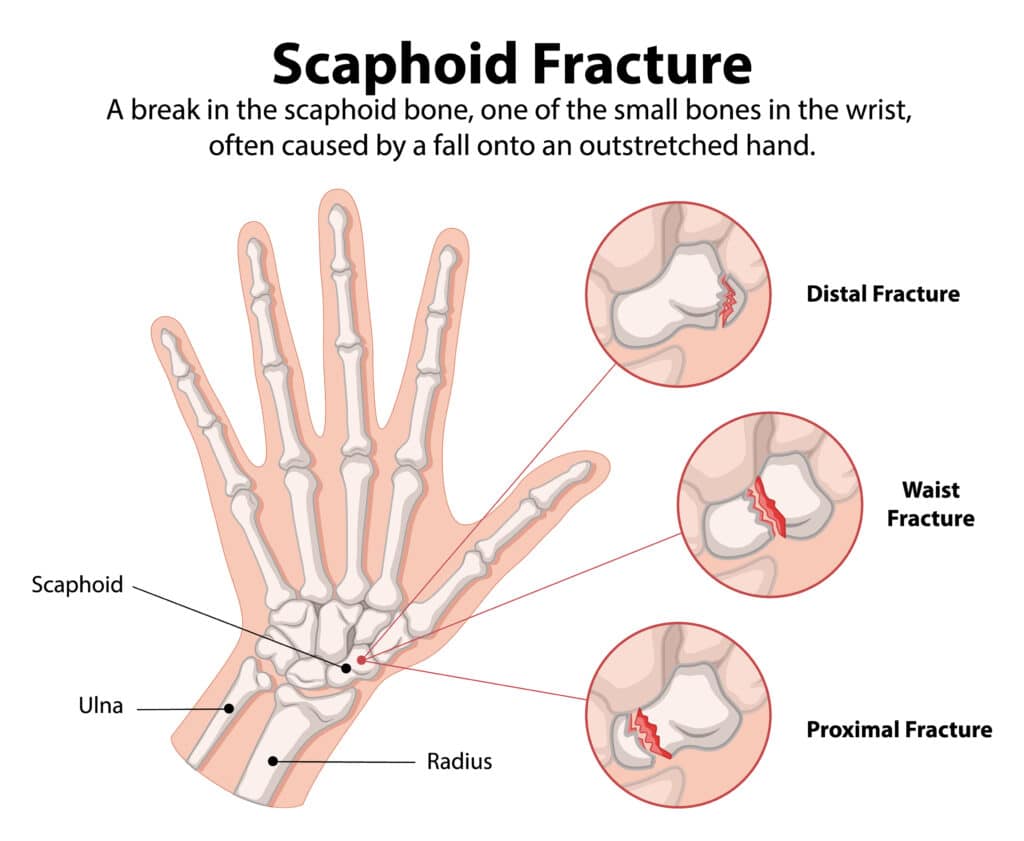
- Pain in the wrist may point to a Colles fracture or scaphoid fracture.
- Pain in the elbow may suggest a radial head fracture or ligament tear.
- Shoulder pain could be due to a rotator cuff injury or dislocation.
By combining physical exam findings with imaging, doctors determine whether you have a mild sprain, a severe fracture, or something in between.
How is FOOSH different from other injuries?
Unlike direct trauma (like being struck by an object), FOOSH is specifically caused by the falling mechanism, which means doctors must consider multiple injury sites even if only one hurts.
Recovery & Prognosis for FOOSH
Recovery from a FOOSH injury depends on the severity of damage, ranging from days for a mild sprain to months for a fracture or dislocation.
How long does a FOOSH injury usually take to heal?
- Mild sprains/soft tissue injuries: Typically 2–6 weeks with rest, bracing, and physical therapy.
- Moderate injuries (non-displaced fractures): Around 6–8 weeks, often requiring casting or splinting.
- Severe injuries (displaced fractures, ligament tears, surgery): 3–6 months or longer, with rehab needed for full function.
Decision pathway: if/then recovery guide
- If your FOOSH involves only mild pain and no fracture → Conservative treatment with rest, ice, and exercises is usually enough.
- If your FOOSH includes a simple fracture or sprain → You may need a cast or brace, followed by physiotherapy.
- If your FOOSH causes severe fractures or dislocation → Surgery may be required, with a longer rehab timeline.
Factors that affect long-term outcomes
- Age: Younger individuals usually heal faster. Older adults with osteoporosis may take longer.
- Bone health: Conditions like osteoporosis slow healing and increase recurrence risk.
- Activity level: Athletes may return faster with therapy but risk reinjury.
- Compliance with rehab: Following physiotherapy and activity guidelines improves long-term results.
Return to work, sport, and lifestyle
- Work: Office workers may return in days to weeks with bracing, while manual laborers may require several months.
- Sport: Light training may resume within weeks for mild cases, but full-contact sports often require 3–6 months post-surgery.
- Daily activities: Simple activities like cooking or carrying groceries can return quickly for mild cases but may take months for severe ones.
Reference: Egol, K. A., Koval, K. J., & Zuckerman, J. D. (2010). Hand fractures: treatment and complications. Journal of the American Academy of Orthopaedic Surgeons, 18(9), 520–530. https://doi.org/10.5435/00124635-201009000-00004
Management of FOOSH
FOOSH management includes pain relief, activity modification, physical therapy, and prevention strategies to avoid reinjury.
What’s the best way to manage a FOOSH injury at home?
- Rest and protect: Use a splint, sling, or brace if recommended.
- Ice and elevate: Apply ice for 15–20 minutes at a time during the first 48 hours to reduce swelling.
- Pain control: Over-the-counter medications may help with inflammation.
- Gentle mobility: Move fingers and unaffected joints to prevent stiffness.
Step-by-step self-help & relief tips
- Apply ice within the first 48 hours to limit swelling.
- Keep the arm elevated on pillows to reduce pressure.
- Use compression or a brace if advised by a doctor.
- Start gentle stretching once pain improves to restore range of motion.
- Gradually strengthen the wrist, forearm, and shoulder with physiotherapy exercises.
Long-term therapy and prevention strategies
- Posture and ergonomics: Good body mechanics reduce fall risk.
- Core and balance training: Improves stability to prevent future falls.
- Flexibility and strength: Targeted exercises for the wrist, elbow, and shoulder build resilience.
- Community support: Joining group exercise or fall-prevention classes helps maintain confidence.
Comparison with other injury management
Unlike arthritis, which requires long-term joint care, FOOSH recovery is often time-limited but intensive, with a focus on healing and regaining full function. Unlike chronic pain conditions, FOOSH usually resolves with appropriate treatment, though some people may develop stiffness or post-traumatic arthritis.
Multidisciplinary Coordinated Care for FOOSH at CARESPACE
At CARESPACE, a FOOSH (Fall On an Outstretched Hand) injury is treated with a comprehensive, team-based approach that addresses both the immediate injury and long-term recovery. Instead of focusing on just one part of the arm, CARESPACE integrates multiple disciplines to restore movement, reduce pain, and prevent reinjury.
How does CARESPACE treat FOOSH differently?
CARESPACE takes a whole-person, multidisciplinary approach to FOOSH injuries, rather than treating only the fracture, sprain, or dislocation. This means your care plan may include chiropractic adjustments, physiotherapy for joint mobility, massage therapy for muscle tension, and kinesiology for movement retraining—all coordinated in one place.
For example, if you fell and fractured your wrist, you might begin with physiotherapy to restore strength and flexibility, while also receiving massage therapy to ease forearm muscle tightness from wearing a cast. If you’re experiencing anxiety or poor sleep because of pain, psychotherapy or coaching can help you cope. This combined approach speeds recovery and supports your overall well-being.
Why does a team approach help FOOSH recovery faster?
FOOSH injuries often affect more than one joint, and recovery requires more than rest. A team approach ensures every aspect of your injury and health is considered.
Key benefits of CARESPACE’s coordinated model:
- Faster healing: Physiotherapy restores mobility while massage therapy reduces stiffness.
- Lower recurrence risk: Kinesiology and fitness training strengthen your body to prevent future falls.
- Better pain control: Chiropractic, acupuncture, and massage work together to reduce discomfort.
- Stronger mental health: Psychotherapy, nutrition counseling, and coaching help you manage stress, insomnia, or fear of falling again.
Compared with single-discipline treatment—where you might only get a cast or exercise sheet—CARESPACE’s multidisciplinary care provides a structured, evidence-based plan tailored to your recovery.
What does a CARESPACE FOOSH care plan look like?
CARESPACE guides you through every stage of recovery—acute, subacute, and maintenance—with seamless coordination between disciplines.
- Acute phase (first weeks): Physiotherapists and chiropractors focus on reducing pain, swelling, and restoring gentle mobility. Massage therapy may address compensatory muscle tightness, and acupuncture may support pain relief.
- Subacute phase (rehab and rebuilding): Kinesiologists design safe movement retraining programs, while physiotherapists progress you to strengthening and flexibility. Mental performance coaches or psychotherapists help manage frustration and keep you motivated.
- Maintenance phase (long-term wellness): Fitness trainers guide safe return to sport or activity, while dietitians support bone health and energy with tailored plans. Chiropractic or physiotherapy check-ins reduce reinjury risk.
This phased plan ensures you’re not just recovering from the initial injury—you’re building resilience for the future.
A day-in-the-life example of multidisciplinary FOOSH care
Imagine you slipped on ice, landed on your hand, and fractured your wrist. At CARESPACE, your recovery might look like this:
- Physiotherapy assessment to restore wrist mobility after cast removal.
- Massage therapy to ease stiffness in your forearm and shoulder.
- Kinesiology session to retrain grip strength and prevent future strain.
- Psychotherapy or coaching to address anxiety about falling again and improve sleep.
- Nutrition consultation for a bone-health diet rich in calcium and vitamin D.
- Fitness training for a safe return to gym workouts or sports.
This type of integrated care plan doesn’t just fix your wrist—it supports your whole body and mind.
The CARESPACE advantage for FOOSH recovery
The advantage of CARESPACE lies in its integration of physical, mental, and lifestyle strategies into a single coordinated plan.
- Evidence-based: All therapies—from physiotherapy to CBT to acupuncture—are grounded in current research.
- Natural and non-invasive: CARESPACE emphasizes conservative, holistic care before considering more invasive options.
- Personalized plans: Each recovery path is customized to your work, sport, and lifestyle goals.
- Seamless teamwork: Practitioners share notes and coordinate care so you’re never left juggling multiple providers.
With this approach, you gain more than symptom relief—you gain confidence, independence, and a stronger foundation for preventing future injuries.
Related Conditions, FAQs, and Disclaimer for FOOSH
A FOOSH (Fall On an Outstretched Hand) injury often overlaps with other musculoskeletal conditions, making proper evaluation essential. Below you’ll find related conditions, practical FAQs, and compliance details to help you better understand and manage this type of injury.
Related Conditions for FOOSH
FOOSH is a mechanism of injury rather than a single diagnosis, so it can result in or mimic several different conditions. Many of these need to be ruled out to guide treatment.
Common related or overlapping conditions include:
- Wrist fractures (e.g., Colles fracture, scaphoid fracture): Some of the most common outcomes of FOOSH, particularly in older adults with osteoporosis.
- Elbow injuries (radial head fracture, dislocation): FOOSH force often transmits into the elbow joint, especially in younger adults.
- Shoulder injuries (rotator cuff tear, dislocation): In higher-impact falls, force may travel into the shoulder.
- Ligament and tendon injuries: Sprains, TFCC (triangular fibrocartilage complex) tears, or tendon ruptures can mimic fractures.
- Nerve compression or irritation: Rarely, swelling or displacement can affect nerves, leading to tingling or weakness.
Because FOOSH may look similar to other conditions like sprains, arthritis, or chronic wrist pain, comprehensive assessment is required.
Looking for information on a different condition? Visit our full Conditions List.
FAQs About FOOSH
The fastest way to relieve FOOSH pain is RICE—Rest, Ice, Compression, Elevation. Using a splint or sling to support the arm, applying ice for 15–20 minutes every few hours, and elevating the limb can reduce swelling and discomfort.
For immediate relief, over-the-counter anti-inflammatories may be recommended. Long-term healing, however, requires identifying whether you have a sprain, fracture, or dislocation. Unlike simple bruises, FOOSH often involves structural damage that needs medical evaluation.
This content is for informational purposes only and is not a substitute for professional medical advice. If you think you may have FOOSH, consult a qualified health provider.
Mild FOOSH injuries such as small sprains may improve on their own within a few weeks, especially with rest and self-care. However, many FOOSH injuries involve fractures or ligament damage that will not heal properly without treatment.
If left untreated, these injuries may lead to chronic pain, stiffness, or even arthritis. Always seek medical attention after a fall to confirm the diagnosis and prevent long-term complications.
This content is for informational purposes only and is not a substitute for professional medical advice. If you think you may have FOOSH, consult a qualified health provider.
You should see a doctor right away if you experience:
- Severe pain or swelling
- Obvious deformity in the wrist, elbow, or shoulder
- Numbness, tingling, or weakness in the hand
- Inability to move or bear weight on the arm
Even if your pain seems mild, it’s worth being checked since scaphoid fractures and ligament injuries may not show immediate swelling but can cause long-term problems if missed.
This content is for informational purposes only and is not a substitute for professional medical advice. If you think you may have FOOSH, consult a qualified health provider.
The best exercises after FOOSH depend on the exact injury. In general, once cleared by your provider, gentle range-of-motion exercises are the first step. Examples include:
- Wrist circles and stretches
- Gentle forearm rotations (supination/pronation)
- Elbow bending and straightening
- Shoulder pendulum swings
As healing progresses, strengthening exercises for grip, forearm, and shoulder muscles help restore stability. Unlike arthritis exercises that focus on joint preservation, FOOSH rehab emphasizes restoring mobility and preventing stiffness after trauma.
This content is for informational purposes only and is not a substitute for professional medical advice. If you think you may have FOOSH, consult a qualified health provider.
Sitting or standing itself does not typically make FOOSH worse. However, poor arm positioning while sitting—like letting the wrist dangle—or standing for long periods without elevating the injured limb can increase swelling and discomfort.
Keeping your arm supported with a sling or resting it on pillows when sitting can help. Standing or walking is safe, as long as you avoid using the injured hand to push, lift, or catch weight.
This content is for informational purposes only and is not a substitute for professional medical advice. If you think you may have FOOSH, consult a qualified health provider.
No, surgery is not always required for FOOSH. Many cases—such as mild sprains or non-displaced fractures—heal with bracing, casting, or physical therapy. Surgery is only needed if there is a displaced fracture, significant ligament tear, or dislocation that cannot be corrected non-surgically.
Compared to chronic conditions like arthritis, which sometimes require joint replacement, FOOSH injuries usually respond well to conservative care when treated early.
This content is for informational purposes only and is not a substitute for professional medical advice. If you think you may have FOOSH, consult a qualified health provider.
Preventing FOOSH means reducing your risk of falls and improving bone and muscle strength. Helpful strategies include:
- Wearing proper footwear to avoid slips
- Practicing balance and core training
- Using wrist guards for sports like skateboarding or rollerblading
- Maintaining bone health with adequate calcium and vitamin D
- Keeping work and home environments free of tripping hazards
Unlike overuse injuries, which can be prevented by posture adjustments, FOOSH prevention is about fall safety and protective strategies.
This content is for informational purposes only and is not a substitute for professional medical advice. If you think you may have FOOSH, consult a qualified health provider.
FOOSH is not a single diagnosis but a mechanism of injury. This means it can cause a wide range of problems, from sprains to fractures, depending on how you fell. In contrast, a direct blow injury (like being struck by an object) typically affects only one area.
Because FOOSH can injure multiple joints at once (wrist, elbow, shoulder), it requires a broader assessment. This distinction helps practitioners catch injuries that might otherwise be missed.
This content is for informational purposes only and is not a substitute for professional medical advice. If you think you may have FOOSH, consult a qualified health provider.
Articles on FOOSH
For more information, you can view all FOOSH articles on our resource hub.
Authorship & Disclaimer
Reviewed by: Dr. Katarina Klassen, Chiropractor
Last Updated: December 15th, 2025
Disclaimer: This content is for informational purposes only and is not a substitute for professional medical advice. If you think you may have FOOSH, consult a qualified health provider.