People ask about dumbbells, barbells, and machines and which is better? Each has its own strengths and limitations which I will address here. It’s also worth noting that choosing the right tools can depend on past injuries, mobility, and movement patterns—areas where physiotherapy can help assess your needs and guide safe strength training.
Barbells
Barbells; mainly compound movements such as squats, deadlifts and rows; have certain advantages such as higher stability than dumbbells, they work a lot of supporting muscles (back & core) and because of this they’re preferred for heavy strength training (i.e. sets of 1-5).
For all the worship that surrounds them they do have limitations such as higher fatigue and injury risk (largely due to heavier weight, muscle involvement and programming considerations). They also aren’t the most time efficient as they require more set up than dumbbells or machines. Lastly – they do have higher coordination and flexibility requirements.
Dumbbells
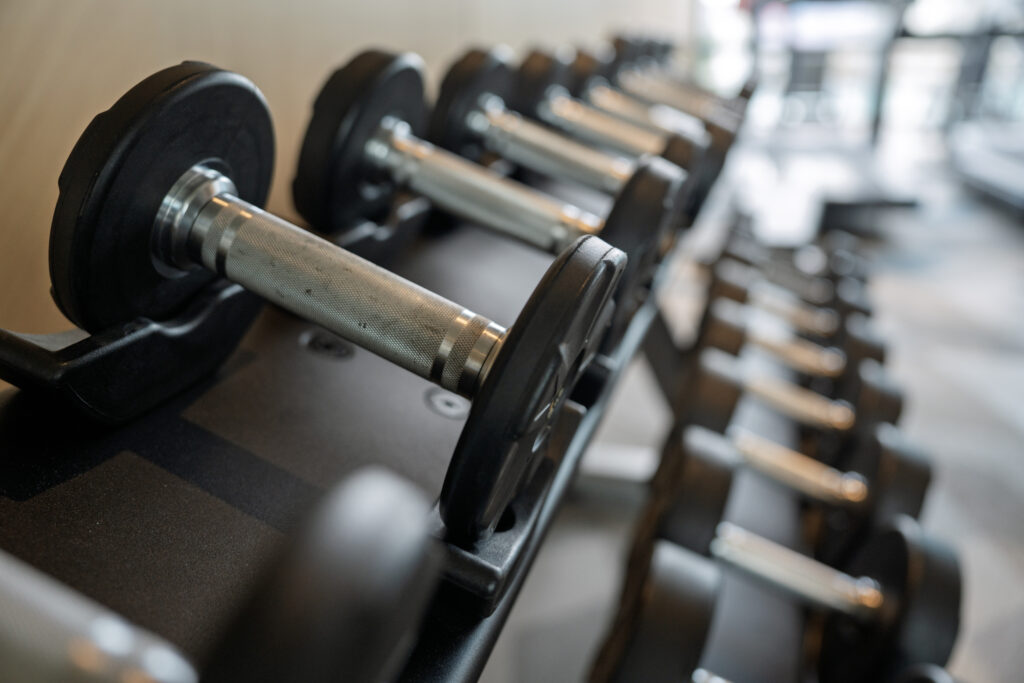
One advantage of dumbbells is the quick “grab and go” nature of them as you aren’t having to adjust a machine, barbell, rack or plates. The other advantage is that you are holding separate implements in each hand as opposed to a single barbell – this helps address strength & muscle imbalances side to side and allows you to maneuver the weights in a more comfortable fashion.
The one big disadvantage with dumbbells is that they aren’t as conducive to heavier (5 reps or less) movements because of the higher stability and coordination requirements. If you’ve ever tried a 5 rep max on most dumbbell exercises it becomes awkward and the ability to get + hold the weights in position can be a limiting factor.
Machines (and in this case I’m referring to pin loaded machines)
Despite all the criticism that “functional training people” have with machines they have many advantages such as they’re easy to learn & isolate specific muscles due to their high stability. Plus pin loaded machines are easy to set up.
The commonly cited disadvantages of weight machines are:
- Some people can be forced into awkward positions by machines if the size and shape of the machine and the user don’t match well
- Not teaching people coordination: A common argument I see is that machines are “non-functional” and don’t teach people how to move (i.e. squat, hip hinge etc). Yes – the fact that machines don’t require a ton of coordination can be both a pro and a con … although I’d rather see people exercising with machines than not exercising at all.
I hope this shows the indications, strengths and weaknesses of each of these movements. As always thanks for reading!
For a broader understanding, explore our physiotherapy treatment page.